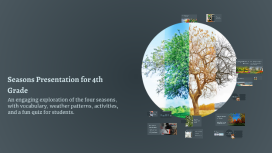
Seasons Presentation for 4th Grade
Transcript: Spring Spring is a season characterized by warmer temperatures, blooming flowers, and new growth in nature. It typically lasts from March to May in the Northern Hemisphere. Understanding the Seasons: A Vital Part of Nature Seasons are distinct periods of the year characterized by specific weather conditions and changes in nature. They play a crucial role in the environment, affecting plant growth, animal behavior, and human activities. Summer Summer is known for its hot weather, long days, and plenty of sunshine. This season usually spans from June to August, making it a popular time for outdoor fun. What are the Four Seasons? Fall Fall, also known as autumn, features cooler temperatures and the changing color of leaves. This season runs from September to November, signaling the harvest time for many crops. Winter Winter is the coldest season, often bringing snow and shorter days. It occurs from December to February and is known for holiday celebrations and winter sports. Spring: A Season of Renewal Spring is characterized by warmer temperatures, longer daylight hours, and the vibrant blooming of flowers and trees. This season symbolizes renewal and growth, as nature awakens from the cold of winter, leading to an explosion of color and life in gardens and parks. Spring Activities and Vocabulary Planting vibrant flowers Enjoying outdoor picnics Learning spring vocabulary Understanding Summer: Characteristics and Weather Summer is marked by high temperatures, providing perfect conditions for outdoor adventures. With longer days, children have more time to enjoy activities like swimming, camping, and playing outside. Seasons Presentation for 4th Grade Swimming in cool water Camping under the stars Summer Activities and Vocabulary Playing outdoor games Going on summer vacations Exploring nature trails An engaging exploration of the four seasons, with vocabulary, weather patterns, activities, and a fun quiz for students. Fun Facts About the Seasons Interesting tidbits that highlight the unique aspects of Earth's seasons. What season comes after spring? After spring, the next season is summer. This is when the weather gets hotter, and many people enjoy outdoor activities. Mini-Quiz: Test Your Knowledge! Name one activity you can do in winter. 24 hours 23.5° In winter, you can build a snowman, go ice skating, or enjoy a cozy day indoors with hot chocolate. These activities are fun ways to embrace the winter season. 6 months 365 days 4 Day length varies by season Tilt of Earth's axis Duration of opposite seasons Length of a year Number of seasons globally Fall: The Season of Change Changes in Temperature Seasonal Changes and Nature As seasons change, temperatures vary significantly. Spring typically brings warmer temperatures, while winter is often cold and chilly. These temperature shifts affect how we dress and the activities we enjoy throughout the year. Fall, also known as autumn, is marked by cooler temperatures that signal the transition from summer to winter. During this season, leaves change color, creating vibrant displays of red, orange, and yellow before they fall from the trees, preparing for the winter months. Recap of the Four Seasons Winter Activities and Vocabulary Apple picking adventures Throughout our journey, we've learned about the four seasons: spring, summer, fall, and winter. Each season has unique characteristics, weather patterns, and fun activities that enrich our lives and connect us to nature. Building snowmen together Winter: Embracing the Cold Winter is characterized by cold temperatures, often resulting in snowfall and icy conditions. Days are shorter, with less sunlight, creating a unique atmosphere for winter activities and celebrations. Halloween celebrations Fall Activities and Vocabulary Ice skating fun Harvest festivals Warm holiday traditions Cool weather attire

 Prezi Present

 Prezi Video

 Prezi Design