You're about to create your best presentation ever

Pyramid Diagram Template Powerpoint

Create your presentation by reusing a template from our community or transition your PowerPoint deck into a visually compelling Prezi presentation.

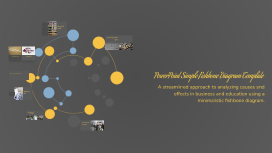
PowerPoint Simple Fishbone Diagram Template

Transcript: Effective Problem Analysis Use this fishbone diagram template to present the root causes of issues clearly and effectively. It is ideal for scenarios that require a structured analysis of factors affecting performance or outcomes. Minimal Text for Maximum Impact When to Use This Template This template supports minimal text usage, enhancing the focus on key points and making complex information more accessible to the audience. Versatile Application in Business and Education The fishbone diagram is especially useful in business and educational contexts for identifying underlying issues and creating actionable solutions, making presentations more effective. Understanding the Fishbone Diagram The fishbone diagram, also known as the Ishikawa or cause-and-effect diagram, is a visual representation that systematically categorizes potential causes of a problem. It facilitates root cause analysis by organizing these causes into distinct categories, enhancing clarity in identifying underlying issues. Visual Segmentation Streamlined for Clarity Each segment of the fishbone is visually distinct, guiding the audience's attention toward relevant written content. This design helps in making complex relationships easier to understand at a glance. The fishbone diagram is designed for clarity, allowing for a focused presentation of information. Its streamlined structure enhances the flow of communication, ensuring that key points stand out effectively. Segment Breakdown of the Fishbone Diagram Understanding the components that contribute to problem analysis. PowerPoint Simple Fishbone Diagram Template Text One Text Two Text Three Text Four Text Five Text Six Text Seven Text Eight Discusses the fourth factor, emphasizing the relationships among different components. Covers the fifth factor, linking it to previous elements for a comprehensive view. Identifies the first factor affecting the issue being analyzed, providing initial insights. Highlights the second factor, adding depth to the analysis and facilitating further discussion. Explores the third factor, illustrating its impact on the overall problem and solutions. Illustrates the sixth factor, providing additional context for the ongoing evaluation. Examines the seventh factor, reinforcing the connection to the overall theme of the fishbone diagram. Concludes with the eighth factor, summarizing its relevance to the analysis at hand. Minimized Text for Clarity Highlighting Key Points A streamlined approach to analyzing causes and effects in business and education using a minimalistic fishbone diagram. The fishbone diagram's design promotes clarity by minimizing text, allowing the audience to focus on essential information. Versatile Applications of the Fishbone Diagram The fishbone diagram serves as an effective tool across diverse sectors such as business and education. It assists teams in pinpointing root causes of challenges, fostering effective problem-solving approaches, and streamlining operational processes, ultimately enhancing performance and decision-making. Summarizing the Fishbone Diagram's Impact The fishbone diagram is an essential analytical tool that simplifies complex problems by categorizing causes, fostering clarity and engagement. Its visual format enhances understanding, making it ideal for effective presentations. The inclusion of a Q&A session further allows for clarification and deeper discussion of the identified issues.

Editable PowerPoint Template

Transcript: Editable PowerPoint Template Guiding Principles for Effective Presentations Design Principles Introduction to Editable Templates Consistency in Style Color Schemes and Branding Maintaining a consistent style throughout a presentation reinforces the brand image and enhances comprehension. Consistent elements, such as color, fonts, and layouts, help the audience follow the narrative without distractions. A well-chosen color scheme can evoke specific emotions and create a memorable experience. Aligning color choices with branding principles ensures recognition and reinforces your message effectively across all slides. Visual Hierarchy and Layout Definition and Purpose Font Selection and Readability Establishing a clear visual hierarchy guides the viewer's attention to the most critical information. Effective layout techniques, such as balancing text and images, can ensure that key points stand out in your presentation. Overview of PowerPoint Benefits Editable templates are pre-designed formats that allow users to modify content, layout, and design. Their primary purpose is to save time and maintain consistency in presentations across different topics and audiences. Choosing the right fonts is crucial for readability and engagement. Sans-serif fonts are generally preferred in presentations due to their clean lines, while limiting the number of font types maintains visual clarity. PowerPoint simplifies the presentation creation process through intuitive tools and features, such as templates, animations, and multimedia integration. Its widespread use ensures compatibility, making it accessible for diverse audiences. Importance of Editable Formats Examples of Use Cases Editable formats promote collaboration among team members, allowing multiple users to contribute to a single presentation without confusion. They enhance adaptability to specific audience needs, ensuring relevant and impactful communication. Editable templates can be applied in various scenarios, including corporate training sessions, educational lectures, and marketing presentations. They help to tailor content to specific objectives while maintaining a professional appearance. Content Guidelines Structuring Your Narrative Incorporating Data Visualizations Use charts and graphs to represent complex data simply, making it easier for the audience to grasp key points. Ensure visualizations are labeled correctly, providing context to avoid misinterpretation. Organize content logically, beginning with a clear introduction, followed by key points and a strong conclusion. Each section should transition smoothly to maintain audience engagement and ensure key messages are memorable. Effective Use of Text and Images Engaging Your Audience Customization Tips Balance text and visuals to enhance understanding, ensuring that images complement and reinforce the message rather than distract. Limit text on slides to key phrases to promote clearer communication and retention. Use interactive elements such as polls, questions, or discussions to foster audience participation and create a dynamic atmosphere. Understanding your audience and addressing their interests can significantly enhance engagement levels. Adding Multimedia Elements Altering Templates for Your Needs Customize templates to reflect your unique branding and message. Adjust colors, fonts, and layouts to better align with your content's theme and improve audience engagement. Take advantage of template features to create a distinct visual identity. Incorporate videos, audio clips, and animations to create dynamic presentations. Multimedia can significantly enhance the storytelling aspect, making information more compelling and easier to retain for your audience. Saving and Sharing Templates Best Practices for Adaptation After customization, save templates in accessible formats for future use. Use cloud services for easy sharing among team members, ensuring everyone has the most up-to-date version to maintain consistency in presentations. When adapting templates, keep the audience's needs and perceptions in mind. Use feedback to refine designs and ensure your modifications serve the original purpose while enhancing clarity and effectiveness.

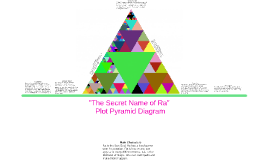
Plot Pyramid Diagram

Transcript: "The Secret Name of Ra" Plot Pyramid Diagram Main Characters Ra is the Sun God. He has a lot of power over his creation. Ra is known and can appear in many different forms. Isis is the Mistress of Magic. She can cast spells and make tricks happen. Exposition Ra, the Sole Creator was visible to the people of Egypt as many forms and names. He could be seen as a scarab beetle and a crowned man. He was also know as the Shinning One or the Hidden One. Isis was the Mistress of Magic, wiser than millions of me. The setting was in the country of Egypt. Inciting Incident Isis longed for Ra's power and dreamed she would have a son named Horus and the throne of Ra to give to her son. She knew that nothing was powerful enough to harm Ra, so she decided to use his power against himself. Isis created a cunning and devious plan. Rising Action Isis created a wicked-looking serpent out of a clod of Earth and Ra's saliva. Through the hours of darkness she whispered spells. Climax/ Crisis When Ra approached the crossroads, the spells of Isis began to work and the clay serpent quivered into life. As Ra passed, it bit him in the ankle and crumbled back into earth. His scream was heard through all creation. Falling Action Isis stood among the gods and goddesses pretending to be as distressed and bewildered as all the other frightened deities. Isis told Ra "Few gods can compare with me in wisdom and I am the Mistress of Magic. If you let me help you, I'm sure that can cure you. Resolution Isis said nothing and knelt beside the Sun God while his pain mourned. When it became unbearable, Ra ordered the other gods to stand back while he whispered his secret name to Isis. Isis than agreed to never tell anyone his secret and then she chanted a spell that drove out the poison in Ra's limbs. Denouement Ra returns to the Boar of Millions of Years and Isis is joyful that her planned worked. She now knows that one day Horus would sit on the throne of Egypt and have the power of Ra.

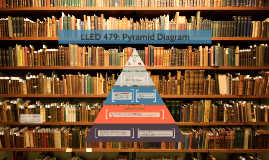
Pyramid Diagram

Transcript: EAL students will have diverse learning styles, may be gifted or have a learning disability, and come from different socioeconomic or religious backgrounds even within the same culture. EAL students will have different exposures to education within their home countries. Identity texts, dual language books, online media as ways to transfer home language knowledge. Treasures Assignment - students will have special objects that are important to them culturally. Accessing EAL students' background knowledge is important for their learning. The tone of spoken words and non-verbal cues are important aspects of language. Underlying beliefs and values often lie at the root of miscommunication. Cultural differences can lead to miscommunication. Schmidt, A. (2008). Rare Books. Flickr (Background Image) Van Syla. (2012). Because of You (background music). France. Retrieved from http://www.jamendo.com/en/track/942502/because-of-you Chart of Values in the United States vs. other countries. Appropriate response of a student with a particular cultural mindset vs. expected response in a Canadian school setting - Scenarios. Culture study of the educational system of various countries. Danger of a Single Story, TED Talks Language may be the only thing students from the same culture have in common. It is important for EAL students to transfer knowledge from their home language to English to assist their learning. Preserving EAL students' cultural heritage and continuing to develop their home language are important factors in their learning. Non- verbal cues: kinesics, proxemics, haptics, artifacts, silence, time. Cultural Values: assertiveness/compliance, dominance/submission, disclosure/privacy, direct/indirect communication, flexible time/time as a commodity. by Karen Leonard March 17, 2014 EAL students are diverse. The 4 stages of culture shock: honeymoon, hostility, humour, home. Assessment, vocabulary instruction, graphic organizers: strategies to help meet the needs of diverse students. Essential Knowledge Background Detail LLED 479: Pyramid Diagram Short-term Information A student's home language proficiency is the strongest predictor of their English academic development. Teachers must be proactive to affirm students' linguistic identity.

PowerPoint Presentation Template

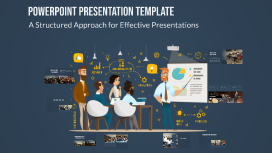
Transcript: PowerPoint Presentation Template A Structured Approach for Effective Presentations Project Title Presentation This presentation outlines the project, including key details such as the presenter's name, roll number, registration number, guide, and the department or institution involved. Questions and Engagement We now open the floor for questions. Your insights and inquiries are valuable for deepening our understanding of the project's implications and findings. Significance of the Project Objective of the Project Problem Addressed This project is significant as it addresses [specific problem], which affects [target population or industry]. By tackling this issue, the project aims to contribute to [specific outcome or field]. The primary objective of this project is to analyze the impact of [specific factor] on [specific area]. This analysis aims to provide insights that can inform future decisions and strategies. The problem addressed in this project is [specific problem statement]. Understanding this problem is crucial for developing effective solutions and advancing knowledge in the field of [related field]. Project Overview Acknowledgments Peer Contributions Funding Support Guide's Contribution I appreciate the collaboration and input from my peers which enriched the research process and findings. Gratitude to [Funding Organization Name] for their financial support that made this project possible. Special thanks to my guide, Dr./Prof. [Full Name], for invaluable guidance and support throughout the project. Correlation Between Variables X and Y Research Methodology The primary outcome of this research indicates a significant correlation between the variables X and Y, suggesting that as X increases, Y also tends to increase. This finding could have implications for future studies in this area. Research Contributions and Future Directions The research highlights significant contributions to the field, addressing critical gaps and providing new insights. Future work will focus on expanding these findings and exploring further applications of the results. 25% Improvement in Performance Metrics Key Findings A secondary finding reveals that the intervention applied improved the performance metrics by approximately 25%, highlighting the effectiveness of the approach taken in this research. Notable Differences and Implications Alignments with Existing Literature Challenges in Data Collection The study also identified several key challenges faced during data collection, including participant engagement and data integrity issues, which may impact the validity of the results and should be addressed in future research. However, some differences were noted, particularly in the interpretation of data and the implications drawn. These divergences highlight the unique contributions of this study and suggest areas for further research and exploration. The findings of this research align closely with previous studies, showing similar trends and outcomes, particularly in areas such as methodology and results. This consistency strengthens the validity of the research and contributes to the existing body of knowledge. Data Collection Methods Qualitative Research Approach Analysis Techniques Data was collected through surveys and interviews, ensuring a diverse range of perspectives. Thematic analysis was used to interpret the data, identifying key themes and patterns relevant to the research question. The research employs a qualitative approach to gain in-depth insights into the topic.

Now you can make any subject more engaging and memorable