You're about to create your best presentation ever

Nutrition Fieldwork Presentation Template

Create your presentation by reusing one of our great community templates.

Fieldwork Presentation

Transcript: Review of vocabulary: 60% Review of concepts: 70% Feedback: 70% Assessment: 100% Content objectives: 90% Language objectives: 20% Students engaged: 100% Pacing: 90% About the Classroom Concepts linked: 90% Links made: 95% Key vocabulary: 60% Fieldwork Presentation Comprehensible Input Learning strategies: 60% Scaffolding techniques: 80% Higher-order thinking: 70% About My Teacher Interaction Interaction: 100% Group configurations: 85% Wait time: 95% Clarifying concepts in L1: 35% Strategies Provide Language Objectives Use different learning strategies Clarify concepts in L1 Ask more higher-order thinking questions Support language objectives in lessons Use different Supplementary Materials Review/Emphasize Key vocabulary Review Key Concepts Allow Student Feedback Review and Assessment Technologically advanced and Student Friendly Students placed in heterogeneous groups Pirate Theme Library in classroom Lesson Delivery Name: Mrs. Conry Location: Anderson Elementary, AISD Grade: 2 Years Experience: 7 Class size: 22 ESL Students: 9 I observed in Mrs. Conry's class language arts lessons and math lessons. Each observation was 2 hours long and I went to a total of 5 observations. I typically sat in the back left hand corner of the room in the guided reading table taking notes during the lessons. Lesson Preparation Building Background By Carley Behrend Speech: 95% Clear explanation:80% Variety of techniques: 95% Practice and Application Content Objectives: 65% Language Objectives: 15% Content Concepts: 95% Supplementary Materials: 80% Adaptation of Content: 70% Meaningful Activities: 80% My Suggestions Hands-on materials: 90% Apply content and language: 85% Integrate language skills: 85%

Fieldwork Presentation:

Transcript: -4 albums: (What's On Your Mind, 2006; Drum Monologue, 2008; Restoration, 2012; Life Begins, 2013). -2014: Received the Individual Artist Awards for World Music Compositions from the Maryland State Arts Council 2009, 2010, & 2011: Nominated for the Wammie Awards for "best world music instrumentalist" by the Washington Area Music Association -Performed on Fox 5 News -Music Genre: mixture of jazz & "African music" (Afrobeat & Highlife). "heavy percussion embellishment gives it something I call the tribal jazz" -Instruments: American drum set, African hand drums, guitar, piano, balafon -Songs: solidarity for "Africans in the diaspora; songs about love, and songs about redemption" & more -Music and teaching is inclusive to "everyone who wants to groove" -The performances are inclusive, but women do not usually perform instruments -Mix of formal and informal practices -Certain style of dress when performing music -Performs mostly in native language About Tosin -Nigerian born and raised, US based artist -Involved in music for over 20 years -Composer, writer, performer -Performs in English & Yoruba Fieldwork Presentation: Tosin Aribisala Influences By: Samantha Coplin Visit: Tosin Musik on YouTube or Tosinbeats.com for more music! His Music Musical Achievements Cultural Insight -Some Religious influences/references in music; "Heavenly" "Shine on Me"; Ceremonies Church -Father/Family -Bob Marley, Tracy Chapman, Fela Kuti, Orlando Julius, & many more!

Fieldwork Presentation

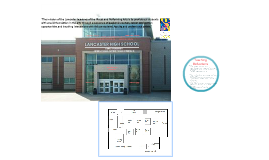
Transcript: Fieldwork Presentation CONCLUSION INTRODUCTION My coursework and field work assignments allowed me the opportunity to learn more about the nuances of bilingual education, assessments, and classifications. I was able to get a better understanding of how these are implemented in my school MY FIELDWORK EXPERIENCES INCLUDED: 1. LINGUISTIC AUTOBIOGRAPHY 2. BILINGUAL ASSESSESSMENT TOOLKIT 3. CRITICAL ANALYSIS 4. FIELDWORK PAMPHLET Key Takeaways >> >> There are many rich benefits of bilingualism >> Important to incoorporate cultural identities in bilingual education >>Important to consider biases in assessments- these assessments are typically normed to the majority population >>Parent/family engagement is crucial CRITICAL ANALYSIS Linguistic Autobiography FIELDWORK PAMPHLET Through my linguistic autobiography, I had the unique opportunity to share my linguistic background and journey while reflecting on the nuances of my linguistic identity. It was gratifying to gain a deeper understanding of how I developed language, which areas of language I currently feel most confident and comfortable in, and reflect on the many strengths of my bilingualism. This practice helped deepen my appreciation for the experiences of MLs in our school and further encouraged me to look at our assessment practices more critically. Assessments used to identify, classify MLs: HILS, NYSITEL, NYSESLAT SCHOOL STRENGTHS: -Bilingual class settings including 12:1:1 TBE -Use of push in AND pull out ENL support -Compliance with regulations regarding MLs -Positive family engagement and collaboration -Special care & coordination in assessemnt of MLs for Special Education to avoid inproper classification of LD -EDUCATE PARENTS ON THE BENEFITS OF BILINGUALISM -INFORM ON SCHOOL POPULATION AND SERVICES/CLASSES AVAILABLE -PROVIDE RESOURCES AND VALUABLE DISTRICT/NYCPS CONTACTS FOR FAMILYS AND EDUCATORS -DISPEL COMMON MYTHS REGARDING BILINGUALISM AND BILINGUAL EDUCATION -ENCOURAGE INCREASED PARENT ENGAGEMENT Challenges -Need to improve incoorporation of MLs cultural and linguistic identities in school environment and curriculum -Increase parent enagement initiatives BILINGUAL ASSESSEMENT TOOLKIT BACKGROUND SOCIAL HISTORY EVALUATIONS -Always done in the family's home language unless they request English. -If in Spanish, I conduct interviews in Spanish -Other languages are conducted with the use of an interpreter **There should be a comprehensive evaluation interview template that can be translated into different langauges MY ROLE IS AN SBST SCHOOL SOCIAL WORKER (BILINGUAL-SPANISH) DISTRICT 25, ELEMENTARY SCHOOL IN FLUSHING, QUEENS >50% OF POPULATION IS CHINESE, >30% IS SPANISH 80% ARE ECONOMICALLY DISADVANTAGED BATTERIA & WISC IV Spanish assessments -concerns are that they are standardized based on "traditional" spanish. -they do not take into account variances in dialects across different spanish speaking countries -There is no control for variantions of language development in same aged students. -Do not account for influence of culture on learning.

Now you can make any subject more engaging and memorable