Crime Board Template
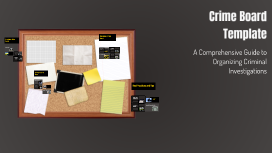
Transcript: Introduction to Crime Board Crime Board Template Definition of a Crime Board Introduction to Crime Board A Crime Board is a visual representation structured to compile and display information pertinent to an investigation. It typically includes details about suspects, evidence, and timelines, facilitating a comprehensive understanding of the case. A Crime Board serves as a visual tool that organizes crucial information related to criminal investigations. By providing a clear overview of evidence, suspects, and timelines, it enhances the efficiency of case analysis and supports law enforcement efforts. Overview of Tools Used Importance in Criminal Investigations Various tools contribute to the creation of an effective Crime Board, including digital software like Microsoft Visio or Lucidchart, and traditional methods such as cork boards with string connections. These tools provide flexibility for organizing data visually and dynamically. The Crime Board enhances the investigative process by providing a centralized repository of information, promoting rapid identification of connections between evidence and suspects. Its visual nature aids in prioritizing leads and fostering collaboration among investigators. Visual Representation Techniques Layout Options Linking Evidence and Suspects Visual Representation Techniques Various layout options exist for organizing information on crime boards, such as radial, grid, or hierarchical layouts. Each layout serves different investigative needs, aiding in logical flow and easy reference to interconnected elements. Establishing connections between evidence and suspects is crucial. Use lines or arrows to indicate relationships, highlighting how each piece of evidence supports accusations or defences, thereby clarifying the investigative narrative. Effective visual representation enhances crime board clarity, facilitating better understanding of complex relationships and data in investigations. Color Coding for Classification Use of Images and Diagrams Color coding assists in quickly identifying categories, such as suspects, evidence, and timelines. Shades can signify urgency, relevance, or type of information, making it visually intuitive for investigators. Incorporating images and diagrams enhances comprehension by providing visual context to textual information. Visual elements can represent people, places, and evidence, creating a multifaceted view of the case. Components of a Crime Board Victim Information Compiling comprehensive information about victims provides context to the crime. Details such as background, relationships, and last known whereabouts can yield essential investigative leads. Central Theme or Focus Suspect Profiles Timeline of Events The central theme of a crime board defines its purpose. This could be a specific crime, victim, or suspect, which guides the entire investigation and ensures relevant information is prioritized and connected effectively. Creating detailed profiles of suspects aids investigators in narrowing down leads. This may include background checks, motives, and behavior patterns, which help in understanding potential actions. A detailed timeline of events clarifies the sequence of actions in a case. This aids in establishing alibis, highlighting gaps in narratives, and correlating evidence effectively. Key Evidence Identification Identifying key evidence is essential for building a case. This includes physical evidence, witness statements, and forensic data that connect suspects to the crime, vital in establishing guilt or innocence. Components of a Crime Board Effective crime boards serve as crucial tools in investigations, providing a structured way to visualize connections, evidence, and significant details relevant to criminal cases. Best Practices for Effective Usage Case Study Examples Collaborative Input from Law Enforcement Evaluation and Outcome Analysis Regular evaluation of the Crime Board's impact on investigations is critical. Assessing outcomes based on crime resolution rates, time to closure, and user feedback allows for improvement and adjustment of practices in future cases. Collaboration among law enforcement officials is essential for a comprehensive Crime Board. Incorporating insights from various departments can pinpoint overlooked evidence and enhance communication, ultimately leading to more successful investigations. Analyzing past case studies where Crime Boards were effectively utilized provides valuable lessons. Successful examples can inspire current investigations by demonstrating strategic approaches to organizing evidence and tracing connections between suspects and incidents. Regular Updates and Revisions Regularly updating the Crime Board ensures that all information remains current and relevant. This allows investigators to accurately track new developments, such as additional evidence or changes in suspect status, which enhances the decision-making process during investigations. Best Practices for

 Prezi Present

 Prezi Video

 Prezi Design