You're about to create your best presentation ever

Maritime Transportation Powerpoint Template

Create your presentation by reusing a template from our community or transition your PowerPoint deck into a visually compelling Prezi presentation.

History of Maritime Transportation

Transcript: The structure and flexibility of junk sails make the junk fast and easily controlled. The sails of a junk can be moved inward toward the long axis of the ship, allowing the junk to sail into the wind. Classic junks were built of softwoods with the outside shape built first. Then multiple internal compartment/bulkheads accessed by separate hatches and ladders, reminiscent of the interior structure of bamboo, were built in. Ancient Times 5,000 BC - Earliest depictions of Sailboats A steamboat is a boat in which the primary method of marine propulsion is steam power, typically driving propellers or paddlewheels. The steamboats that traveled the rivers shared a basic design; they had a hull, or body, made of timber (later steel was used), and a wooden paddlewheel. The paddlewheel had a circular center with spokes coming from it like a bicycle wheel. Planks were attached to the spokes to make the paddle, which was placed on either the side or rear of the boat. Boats with paddles on the side were called sidewheelers, while boats with a paddle at the rear were called sternwheelers. Thank You! A sewn boat is a type of wooden boat which is clinker built and held together with tendons or flexible wood, such as roots and willow branches. Sewn boat construction techniques were used in many parts of the world prior to the development of metal fasteners, and continued to be used long after that time for small boats to reduce construction costs where metal fasteners were too expensive. 1000 AD - Viking Long Ships were developed A trireme was an ancient vessel and a type of galley that was used by the ancient maritime civilizations of the Mediterranean, especially the Phoenicians, ancient Greeks and Romans. The trireme derives its name from its three rows of oars, manned with one man per oar. The early trireme was a development of the penteconter, an ancient warship with a single row of 30 oars on each side (i.e., a double-banked boat), and of the bireme, a warship with two banks of oars,of Phoenician origin. History of Maritime Transportation 542 BC - First written record of a Trireme - or simply dugout is a boat made from a hollowed tree trunk. Other names for this type of boat are logboat and monoxylon. Dugouts are the oldest boats archaeologists have found, dating back about 8,000 years to the Neolithic Stone Age.This is probably because they are made of massive pieces of wood, which tend to preserve better bark canoes. About 1190 AD - Alexander Neckam writes the first European description of a magnetic compass, which started the Age of Navigation 15th Century - Caravel, the most effective sailing ship developed in the Mediterranean but subsequently adapted by the Spanish and Portuguese for service in the Atlantic. Turbinia was the first steam turbine-powered steamship. Built as an experimental vessel in 1894, and easily the fastest ship in the world at that time, Turbinia was demonstrated dramatically at the Spithead Navy Review in 1897 and set the standard for the next generation of steamships, the majority of which were turbine powered. A steam turbine is a device that extracts thermal energy from pressurized steam and uses it to do mechanical work on a rotating output shaft. 200 AD - Junks were mainly used by the Chinese 1859 - The first Ironclad Warship, the Gloire, is launched. These boats were made of bundles of bound papyrus reeds. Papyrus is different from paper because papyrus is a laminated material made from thinly cut strips from the stalk of Cyprus Papyrus plant. These boats were made of bundles of bound papyrus reeds, and were lashed together into a long thin hull form in the style of a slight crescent. This lifted the ends out of the water. The bundle was made as wide as possible for stability, and an extra bundle was put on top so that the cargo and crew were kept reasonable dry. Longships were a type of ship invented and used by the Norsemen for trade, commerce, exploration, and warfare during the Viking Age. The longships were characterized as a graceful, long, narrow and light wooden boat, with a shallow-draft hull designed for speed. The ship's shallow draft allowed navigation in waters only one metre deep and permitted random beach landings, while its light weight enabled it to be carried over portages or used bottoms up for shelter in camps. Longships were also double-ended, the symmetrical bow and stern allowing the ship to reverse direction quickly without a turn around; this trait proved particularly useful at northern latitudes, where icebergs and sea ice posed hazards to navigation. Longships were fitted with oars along almost the entire length of the boat itself. Reported By: Editha L. Bautista MaEd The Ictineo II was 14 metres (46 ft) long, 2 metres (6.6 ft) wide, and 3 metres (9.8 ft) high. Her displacement was 46 tonnes and her interior volume was 29 cubic metres (1,000 cu ft). She was built of olive wood with oak reinforcements, and a 2 mm thick layer of copper. Her upper side had a

WATERWAYS AND MARITIME TRANSPORTATION

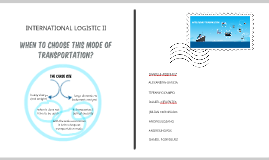
Transcript: DANIEL CIFUENTES Best products are produced and sold in competitive market. HISTORY OF WATER-BASED TRANSPORTATION better quality and lower prices when it does not have to be quick designed by Péter Puklus for Prezi limited areas of operation wider distribution means greater demand it characterized by high security efficient production GENERAL CARGO ANDRES LOZANO with the scale economies it is the cheapest transportation mode BULK CARRIERS safety larger capacity bad weather deeper penetration into markets the new administration helps Colombia to advance in ports and waterways the slowest mode of transportation DANIEL RODRIGUEZ TIFFANY OCAMPO ALEXANDRA GARCIA Bill of lading sea waybill MAGEMENT OF COLOMBIAN PORTS AND WATER WAYS large dimensions (volumetric weight) DISADVANTAGES of water transportation types of maritime transportation THE CARGE SIZE COLOMBIA nowadays it is managed by the private company named "ports of Colombia" (colpuertos). success in supply chain Phoenicians. Exploration of north America identified large amounts of natural resources. 16th-18th Market of crops to Europe Increase of world trade levels since the end of WWII. USA take advantage of trading opportunities as new world markets opened. ROLL ON-ROLL OFF WATER FREIGHT TRANSPORTATION PASSENGER VESSELS DANIELA ARBELAEZ ANDRES HOYOS heavy charge (real weight) documents JULIAN CORONADO Process of transporting commodities, goods and cargo. Lifeblood of the word economy carrying almost 80% of international trade. Rivers, canals, barges are used to carry bulk cargo. Port operations needed (infrastructure). The ports and water ways were managed by the navigation and ports department. Low cost delays at ports INTERNATIONAL LOGISTIC II The complement to these ports are placed in Tumaco, Turbo and San Andrés Island and other ports which are maritime oil terminals. WHAT THE MARITIME TRANSPORTATION IS? Buenaventura, Cartagena, Barranquilla y Santa Marta. TRANSPORTATION ROLE IN INTERNATIONAL TRADE WHEN TO CHOOSE THIS MODE OF TRANSPORTATION? Colombia has 4 main ports. ADVANTAGES OF WATER TRANSPORT

Maritime Transportation

Transcript: Introduction to Maritime Transport Types of Vessels: Cargo Ships Cargo ships are designed for transporting goods and are the backbone of international trade. They come in various sizes, including container ships, which carry standardized cargo containers, making loading and unloading efficient. Maritime transport is a vital component of global trade, facilitating the movement of goods across oceans and waterways. It plays a significant role in the economy by enabling international commerce, reducing transportation costs, and linking markets worldwide. Types of Vessels: Tankers Tankers are specialized vessels built to transport liquid cargoes such as oil, chemicals, and liquefied natural gas. They have specific designs to ensure safety and efficiency during the transportation of hazardous materials. Types of Vessels: Bulk Carriers Key Components of Maritime Transport Bulk carriers are vessels specifically designed for the transport of bulk commodities such as coal, grain, and ore. Their design facilitates the easy loading and unloading of large quantities of unpackaged goods. Historical Development of Maritime Transport Ports and Terminals: Functions and Significance Ports and terminals serve as critical hubs in maritime transport, facilitating the transfer of goods between land and sea. They provide essential services such as loading, unloading, storage, and customs clearance, playing a vital role in the global supply chain. An overview of key milestones in the evolution of maritime transport through the ages. Shipping Routes: Major Global Shipping Lanes Shipping routes, including major global shipping lanes, are strategically important for maritime transport. They determine the flow of goods and are often established based on factors like distance, safety, and trade agreements. 19th Century 20th Century Ancient Times The Industrial Revolution brought about the introduction of steamships, revolutionizing maritime transport with increased speed and capacity. The advent of container shipping in the mid-20th century revolutionized global trade by standardizing cargo transport and significantly reducing shipping times. The establishment of early trade routes by civilizations such as the Phoenicians and Vikings, facilitating commerce across seas and rivers. 15th-17th Century The Age of Exploration marked significant advancements in navigation and ship design, enabling European powers to explore and colonize new territories. Economic Impact of Maritime Transport Highlighting the vital role of maritime transport in facilitating trade and supporting economies. 90% $1.5 trillion 70% 20% 1.5 million Share of the world's freight transported by maritime routes. Estimated annual contribution of maritime transport to global GDP. Percentage of global trade carried by sea. Proportion of global CO2 emissions accounted for by the maritime sector. Number of jobs supported by the maritime industry globally. Environmental Regulations Compliance with stringent environmental laws is crucial to minimize pollution and protect marine ecosystems. Piracy and Security Threats Increased incidents of piracy pose risks to ships, cargo, and crew, necessitating enhanced security measures. Infrastructure Limitations Aging port facilities and insufficient infrastructure can hinder the efficiency and capacity of maritime transport. Challenges in Maritime Transport Technological Advancements and Adaptation The industry must continually adapt to new technologies to improve operational efficiency and safety standards. Understanding the hurdles that impact efficiency and safety in maritime operations. Maritime Transportation Future of Maritime Transport An Overview of the Global Shipping Industry Navigating the next phase of maritime evolution through innovation and sustainability. Enhancing Safety Protocols Green Technology Integration Expansion of Trade Routes Upgrading security measures and regulations to address emerging risks in maritime transport. Embracing Automation Implementation of eco-friendly fuels and energy-efficient vessels to reduce carbon emissions. Development of new maritime corridors to facilitate increased global trade. Utilization of autonomous ships and AI-driven logistics to enhance operational efficiency. Conclusion The sea is the most powerful and the most beautiful of all the elements, and it is the lifeblood of global trade. Maritime transport is essential for facilitating international trade and economic growth. Its adaptability to changing technologies, regulations, and global demands underscores its crucial role in the modern economy. Quote on Maritime Transport

Maritime transportation in Vietnam

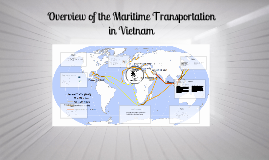
Transcript: - Increasing cargo volume and vessel size from/to ports, maintain the competitiveness in the global integration process, as well as uphold the momentum role. -Establish and develop connecting points for logistics system. - Improve and upgrade existing ports to improve conditions in quality and technology. - Total investment cost is: 46 ÷ 56 bil.USD in the stage to 2030, 20 ÷ 25 bil.USD in the stage to 2020. - State budget takes 12% ÷ 15%. - Investment cost mobilized from investors and enterprises. - located in the South East Asia - 329,000 square kilometers and a population of nearly 80 million - Facing toward the Pacific Ocean in the East - Has a long coastline of more than 3,000 kilometers along which a considerable number of ports are internationally opened. Seaport system - Decision of the Government No. 1195/QD-TTg, Ha Noi, November 4th, 2003. - http://www.iss-shipping.com/Attachments/VIETNAM%20SEAPORT%20SYS%20DEV%20TIL%202020%20_2_.pdfJica. (n.d). http://www.jica.go.jp/project/english/vietnam/0271144E0/01/index.htmlMagone, J. G. (2008). Maritime Transportation Issues http://www.globaloceans.org/globaloceans/sites/udel.edu.globaloceans/files/Maritime-Transportation-PB-June18.pdfMichaelowa, Merchant feet Linh Nguyen Solutions The maritime transportation system in Vietnam - Lack of comprehensiveness both in scale and implementation process (specialized ships, advanced technology and so on) - Low quality and backward technology - Average age of crew is higher than other country neighbors. - Lack of investment and appropriate future plan. -Group 1: Northern seaport group from Quang Ninh to Ninh Binh -Group 2: Northern Central seaport group from Thanh Hoa to Ha Tinh -Group 3: Middle Central seaport group from Quang Binh to Quang Ngai -Group 4: Southern Central seaport group from Binh Dinh to Binh Thuan -Group 5: Eastern South seaport group including Con Dao and ports on Soai Rap river, Tien Giang -Group 6: Mekong delta seaport group including Phu Quoc and Eastern south islands. International Maritime transport and climate policy. Pg. 127. Intereconomics; May/Jun 2000. http://siteresources.worldbank.org/INTRANETTRADE/Resources/WBI-Training/viettransport_tho.pdfTran, C.V. (n.d). http://ieeexplore.ieee.org/xpl/login.jsp?tp=&arnumber=1406377&url=http%3A%2F%2Fieeexplore.ieee.org%2Fxpls%2Fabs_all.jsp%3Farnumber%3D1406377University of Rijeka. (2005 http://www.pfri.uniri.hr/~bopri/documents/Unit01a-Internationalshippingindustry_003.doc References Overview of the Maritime Transportation in Vietnam Finally Content Issues - Almost ships are in small and medium sizes - Statistics of the national merchant feet 1 - Location of Vietnam 2- The maritime transportation system in Vietnam 3- Issues and Solutions Geographical location -17 seaports class I, 23 seaports class II and 9 seaport class III -Close to 350 berths with a total length of 40,000m (double higher than 1999) -35 access points to national ports and 12 points to dedicated ports -Cargo through puts have reached 196.6 Mil. Ton, including 5.02 Mil TEU -Average growth rate: 13% annually

Editable PowerPoint Template

Transcript: Editable PowerPoint Template Guiding Principles for Effective Presentations Design Principles Introduction to Editable Templates Consistency in Style Color Schemes and Branding Maintaining a consistent style throughout a presentation reinforces the brand image and enhances comprehension. Consistent elements, such as color, fonts, and layouts, help the audience follow the narrative without distractions. A well-chosen color scheme can evoke specific emotions and create a memorable experience. Aligning color choices with branding principles ensures recognition and reinforces your message effectively across all slides. Visual Hierarchy and Layout Definition and Purpose Font Selection and Readability Establishing a clear visual hierarchy guides the viewer's attention to the most critical information. Effective layout techniques, such as balancing text and images, can ensure that key points stand out in your presentation. Overview of PowerPoint Benefits Editable templates are pre-designed formats that allow users to modify content, layout, and design. Their primary purpose is to save time and maintain consistency in presentations across different topics and audiences. Choosing the right fonts is crucial for readability and engagement. Sans-serif fonts are generally preferred in presentations due to their clean lines, while limiting the number of font types maintains visual clarity. PowerPoint simplifies the presentation creation process through intuitive tools and features, such as templates, animations, and multimedia integration. Its widespread use ensures compatibility, making it accessible for diverse audiences. Importance of Editable Formats Examples of Use Cases Editable formats promote collaboration among team members, allowing multiple users to contribute to a single presentation without confusion. They enhance adaptability to specific audience needs, ensuring relevant and impactful communication. Editable templates can be applied in various scenarios, including corporate training sessions, educational lectures, and marketing presentations. They help to tailor content to specific objectives while maintaining a professional appearance. Content Guidelines Structuring Your Narrative Incorporating Data Visualizations Use charts and graphs to represent complex data simply, making it easier for the audience to grasp key points. Ensure visualizations are labeled correctly, providing context to avoid misinterpretation. Organize content logically, beginning with a clear introduction, followed by key points and a strong conclusion. Each section should transition smoothly to maintain audience engagement and ensure key messages are memorable. Effective Use of Text and Images Engaging Your Audience Customization Tips Balance text and visuals to enhance understanding, ensuring that images complement and reinforce the message rather than distract. Limit text on slides to key phrases to promote clearer communication and retention. Use interactive elements such as polls, questions, or discussions to foster audience participation and create a dynamic atmosphere. Understanding your audience and addressing their interests can significantly enhance engagement levels. Adding Multimedia Elements Altering Templates for Your Needs Customize templates to reflect your unique branding and message. Adjust colors, fonts, and layouts to better align with your content's theme and improve audience engagement. Take advantage of template features to create a distinct visual identity. Incorporate videos, audio clips, and animations to create dynamic presentations. Multimedia can significantly enhance the storytelling aspect, making information more compelling and easier to retain for your audience. Saving and Sharing Templates Best Practices for Adaptation After customization, save templates in accessible formats for future use. Use cloud services for easy sharing among team members, ensuring everyone has the most up-to-date version to maintain consistency in presentations. When adapting templates, keep the audience's needs and perceptions in mind. Use feedback to refine designs and ensure your modifications serve the original purpose while enhancing clarity and effectiveness.

Maritime Transportation Contracts

Transcript: Introduction to Sea Transportation Understanding Contracts and Their Importance Introduction to Sea Transportation Contracts Importance of Sea Transportation for Passengers and Cargo Sea transportation plays a crucial role in global trade, allowing for the efficient movement of goods and people across vast distances. It is often more cost-effective and environmentally friendly compared to other modes of transport, making it a preferred choice for many businesses. Sea transportation contracts are essential agreements that outline the terms and conditions for the movement of passengers and cargo across oceans. These contracts ensure that both parties understand their rights and responsibilities, promoting safe and efficient transport. Types of Sea Transportation Contracts Key Components of a Sea Transportation Contract Roles and Responsibilities of Carriers Roles and Responsibilities of Shippers Shippers are responsible for providing accurate information about the cargo and ensuring it is ready for transport. They must also comply with all regulations and pay the agreed freight charges. There are several types of sea transportation contracts, including charter parties, bills of lading, and freight contracts. Each type serves a specific purpose and outlines the terms of the transportation agreement between parties. A sea transportation contract typically includes essential components such as the parties involved, cargo details, and payment terms. Understanding these components is crucial for ensuring compliance and avoiding disputes. Carriers are responsible for the safe and timely transportation of goods by sea. They must adhere to the terms of the contract and ensure that the cargo is handled properly throughout the journey. Maritime Transportation Contracts Understanding Sea Transportation Contracts Legal Regulations Governing Sea Transportation Sea transportation is governed by a complex framework of international and national laws. These regulations ensure safety, environmental protection, and fair trade practices among nations. Insurance and Liability in Sea Transportation Insurance is crucial in sea transportation to protect against potential losses or damages. Understanding liability clauses helps parties navigate risks associated with maritime operations. Legal and Financial Aspects Documentation Required for Sea Transportation Proper documentation is essential for the smooth operation of sea transportation. Key documents include bills of lading, customs declarations, and insurance certificates. Pricing and Payment Terms in Sea Contracts Pricing in sea transportation contracts can vary based on distance, cargo type, and service level. Clear payment terms help prevent disputes and ensure timely transactions. A Comprehensive Overview of Passenger and Cargo Agreements at Sea Dispute Resolution in Sea Transportation Contracts Dispute resolution is crucial in sea transportation contracts to ensure smooth operations. Effective mechanisms can prevent costly delays and foster better relationships between parties involved. Case Studies: Successful Sea Transportation Contracts Examining successful sea transportation contracts provides valuable insights into best practices. These case studies highlight the importance of clear terms and effective communication. Future Trends in Sea Transportation Challenges and Future of Sea Transportation The future of sea transportation is shaped by technological advancements and sustainability efforts. Innovations such as autonomous ships and eco-friendly fuels are on the rise. Challenges in Sea Transportation Sea transportation faces numerous challenges, including regulatory compliance and environmental concerns. Addressing these issues is essential for the industry's growth and sustainability. Conclusion and Summary of Key Points In conclusion, understanding the challenges and future trends in sea transportation is vital for stakeholders. A proactive approach can lead to more efficient and sustainable practices in the industry.

PowerPoint Presentation Template

Transcript: PowerPoint Presentation Template A Structured Approach for Effective Presentations Project Title Presentation This presentation outlines the project, including key details such as the presenter's name, roll number, registration number, guide, and the department or institution involved. Questions and Engagement We now open the floor for questions. Your insights and inquiries are valuable for deepening our understanding of the project's implications and findings. Significance of the Project Objective of the Project Problem Addressed This project is significant as it addresses [specific problem], which affects [target population or industry]. By tackling this issue, the project aims to contribute to [specific outcome or field]. The primary objective of this project is to analyze the impact of [specific factor] on [specific area]. This analysis aims to provide insights that can inform future decisions and strategies. The problem addressed in this project is [specific problem statement]. Understanding this problem is crucial for developing effective solutions and advancing knowledge in the field of [related field]. Project Overview Acknowledgments Peer Contributions Funding Support Guide's Contribution I appreciate the collaboration and input from my peers which enriched the research process and findings. Gratitude to [Funding Organization Name] for their financial support that made this project possible. Special thanks to my guide, Dr./Prof. [Full Name], for invaluable guidance and support throughout the project. Correlation Between Variables X and Y Research Methodology The primary outcome of this research indicates a significant correlation between the variables X and Y, suggesting that as X increases, Y also tends to increase. This finding could have implications for future studies in this area. Research Contributions and Future Directions The research highlights significant contributions to the field, addressing critical gaps and providing new insights. Future work will focus on expanding these findings and exploring further applications of the results. 25% Improvement in Performance Metrics Key Findings A secondary finding reveals that the intervention applied improved the performance metrics by approximately 25%, highlighting the effectiveness of the approach taken in this research. Notable Differences and Implications Alignments with Existing Literature Challenges in Data Collection The study also identified several key challenges faced during data collection, including participant engagement and data integrity issues, which may impact the validity of the results and should be addressed in future research. However, some differences were noted, particularly in the interpretation of data and the implications drawn. These divergences highlight the unique contributions of this study and suggest areas for further research and exploration. The findings of this research align closely with previous studies, showing similar trends and outcomes, particularly in areas such as methodology and results. This consistency strengthens the validity of the research and contributes to the existing body of knowledge. Data Collection Methods Qualitative Research Approach Analysis Techniques Data was collected through surveys and interviews, ensuring a diverse range of perspectives. Thematic analysis was used to interpret the data, identifying key themes and patterns relevant to the research question. The research employs a qualitative approach to gain in-depth insights into the topic.

Now you can make any subject more engaging and memorable