Individual Business Plan
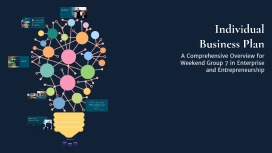
Transcript: Individual Business Plan Overview This presentation outlines the key elements of the Individual Business Plan developed for Weekend Group 7 as part of the Enterprise and Entrepreneurship module (LCM4006). It includes an in-depth exploration of objectives, market analysis, marketing strategies, and financial projections, demonstrating a comprehensive approach to launching a successful business. Student Information Student Name: Nika Vlasova Student Number: 2416718 Teacher: Andry Rakotovololona Individual Business Plan Define the Business Concept The business concept focuses on providing innovative solutions tailored to meet the needs of our target audience, ensuring sustainability and growth. Identify Target Market Our primary target market consists of young professionals aged 25-35 who seek convenience and quality, complemented by a secondary market of college students looking for affordable options. Business Plan Objectives Outline Marketing Strategies A Comprehensive Overview for Weekend Group 7 in Enterprise and Entrepreneurship Marketing strategies include digital marketing campaigns, social media engagement, and community partnerships to enhance brand visibility and customer loyalty. Establish Financial Projections Financial projections aim for steady growth, anticipating revenues of $50,000 in the first year, increasing to $100,000 by year three, with detailed budget management. Market Analysis Target Market: Young Professionals The target market of young professionals typically seeks products and services that offer convenience and efficiency due to their busy lifestyles. They value quality and are willing to pay a premium for services that save them time and enhance their productivity. Target Market: College Students In contrast, college students are often budget-conscious and prioritize affordability. They seek value for money, and marketing strategies targeting this demographic should emphasize cost-effectiveness and accessibility without compromising essential features. Success is not the key to happiness. Happiness is the key to success. If you love what you are doing, you will be successful. Albert Schweitzer Marketing Strategy A structured approach to develop and execute the marketing plan for the business. Step 4: Customer Feedback Loop Step 1: Market Research Step 3: Launch Campaign Gather and analyze customer feedback to refine marketing strategies. Step 2: Branding Development Conduct thorough research to understand market trends and consumer preferences. Implement a strategic marketing campaign to promote the business. Create a strong brand identity that resonates with the target audience. Financial Projections Projected revenue growth over the first three years reflects the business's potential to scale and capture market share. $50,000 $100,000 $75,000 Year 1 Revenue Year 3 Revenue Year 2 Revenue

 Prezi Present

 Prezi Video

 Prezi Design