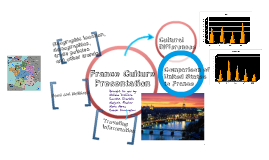
France Presentation
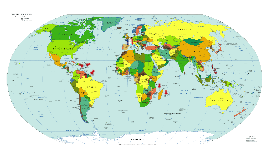
Transcript: France French Map Metropolitan France: 46 00 N, 2 00 E French Guiana: 4 00 N, 53 00 W Guadeloupe: 16 15 N, 61 35 W Martinique: 14 40 N, 61 00 W Mayotte: 12 50 S, 45 10 E Reunion: 21 06 S, 55 36 E France Flag February 15, 1794 The France Go Missing Metropolitan France: Western Europe, bordering the Bay of Biscay and English Channel, between Belgium and Spain, southeast of the UK; bordering the Mediterranean Sea, between Italy and Spain French Guiana: Northern South America, bordering the North Atlantic Ocean, between Brazil and Suriname Guadeloupe: Caribbean, islands between the Caribbean Sea and the North Atlantic Ocean, southeast of Puerto Rico Martinique: Caribbean, island between the Caribbean Sea and North Atlantic Ocean, north of Trinidad and Tobago Mayotte: Southern Indian Ocean, island in the Mozambique Channel, about half way between northern Madagascar and northern Mozambique Reunion: Southern Africa, island in the Indian Ocean, east of Madagascar France's Economy France is in the midst of transition from a well-to-do modern economy that has featured extensive government ownership and intervention to one that relies more on market mechanisms. The government has partially or fully privatized many large companies, banks, and insurers, and has ceded stakes in such leading firms as Air France, France Telecom, Renault, and Thales. It maintains a strong presence in some sectors, particularly power, public transport, and defense industries. With at least 75 million foreign tourists per year, France is the most visited country in the world and maintains the third largest income in the world from tourism. France's leaders remain committed to a capitalism in which they maintain social equity by means of laws, tax policies, and social spending that reduce income disparity and the impact of free markets on public health and welfare. France has weathered the global economic crisis better than most other big EU economies because of the relative resilience of domestic consumer spending, a large public sector, and less exposure to the downturn in global demand than in some other countries. Nonetheless, France's real GDP contracted 2.5% in 2009, but recovered somewhat in 2010, while the unemployment rate increased from 7.4% in 2008 to 9.5% in 2010. Telephones - main lines in use: 36.154 million; 35.2 million (metropolitan France) (2010) country comparison to the world: 8 Telephones - mobile cellular: 64 million; 62.6 million (metropolitan France) (2010) country comparison to the world: 20 Internet country code: metropolitan France - .fr; French Guiana - .gf; Guadeloupe - .gp; Martinique - .mq; Mayotte - .yt; Reunion - .re Internet hosts: 15,182,001; 15.161 million (metropolitan France) (2010) country comparison to the world: 7 Internet users: 45.262 million; 44.625 million (metropolitan France) (2009) country comparison to the world: 8 http://www.youtube.com/watch?v=fz20Umdk8NE&feature=player_profilepage Military branches: Field info displayed for all countries in alpha order. Army (Armee de Terre; includes Marines, Foreign Legion, Army Light Aviation), Navy (Marine Nationale; includes Naval Air, Maritime Gendarmerie (Coast Guard)), Air Force (Armee de l'Air (AdlA); includes Air Defense), National Gendarmerie (2011) Military service age and obligation: Field info displayed for all countries in alpha order. 17-40 years of age for male and female voluntary military service (with parental consent); no conscription; 12-month service obligation; women serve in noncombat posts (2010) Manpower available for military service: Field info displayed for all countries in alpha order. males age 16-49: 14,563,662 females age 16-49: 14,238,434 (2010 est.) Manpower fit for military service: Field info displayed for all countries in alpha order. males age 16-49: 12,025,341 females age 16-49: 11,721,827 (2010 est.) Manpower reaching militarily significant age annually: Field info displayed for all countries in alpha order. male: 396,050 female: 377,839 (2010 est.) Military expenditures: Field info displayed for all countries in alpha order. 2.6% of GDP (2005 est.) country comparison to the world: 58 The Eiffel Tower (French: La Tour Eiffel, [tuʁ ɛfɛl], nickname La dame de fer, the iron lady) is a wrought iron lattice tower located on the Champ de Mars in Paris. Built in 1889, it has become both a global icon of France and one of the most recognizable structures in the world. The tower is the tallest building in Paris[10] and the most-visited paid monument in the world; millions of people ascend it every year. Named after its designer, engineer Gustave Eiffel, the tower was built as the entrance arch to the 1889 World's Fair. Historical sites Religion History The Frankish Kingdoms Hundred Years War It was between France, Scotland, Wales, Castile (origanal Spain) and Bohemia against England, Burgandy, Portugal, Luxenbourg, and the small Germanic states that made up the Holy Roman Empire. Napolean The immediate trigger for the

 Prezi Present

 Prezi Video

 Prezi Design