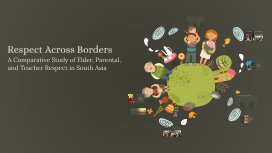
Respect Across Borders
Transcript: Comparative Analysis of Respect Across South Asian Countries Examining the diverse practices and beliefs surrounding respect for elders, parents, and teachers in India, Pakistan, Bangladesh, Nepal, and Bhutan. Bangladesh Nepal India Respect is shown through the use of polite language and gestures, which have evolved to strengthen familial bonds over generations. Rituals and ceremonies play a crucial role in honoring parental figures and teachers, reflecting deep cultural traditions of respect. Respect is expressed through gestures like touching feet and using honorifics, reflecting family hierarchy and traditional customs. Pakistan Bhutan Cultural norms and religious teachings emphasize honoring parents and teachers, with children taught to seek their blessings. Respect for elders is deeply connected to Buddhist teachings, fostering a communal sense of reverence for wisdom and age. Respect through Buddhist Teachings Contrast with Other Cultures In Bhutan, respect for elders is a fundamental aspect of the culture, heavily influenced by Buddhist principles. Elders are viewed as wise and revered members of the community, and their guidance is sought in various aspects of life. This respect is manifested through rituals, community gatherings, and everyday interactions where elders are given precedence and honor. In contrast, other South Asian countries may incorporate different cultural practices when it comes to respecting elders, such as familial hierarchy or specific rituals that vary widely. While they also emphasize respect, these practices may not be as closely linked to religious or spiritual beliefs as in Bhutan. Respect Across Borders Rituals and Festivals In Nepal, it is customary to perform rituals during festivals, which include honoring and seeking blessings from elders. These practices reinforce family ties and community bonds. A Comparative Study of Elder, Parental, and Teacher Respect in South Asia Use of Honorifics Nepal's Unique Customs Respect is also shown through the use of honorific titles when addressing elders, reflecting the importance of language and communication in demonstrating reverence. Offering Seats The cultural norm of offering seats to elders in public places highlights the deep-rooted respect for age and wisdom in Nepali society. Foundational Value Timeline of Respect in Bangladesh In South Asia, respect for elders is a foundational value that shapes family and societal dynamics. This cultural norm fosters strong intergenerational relationships and ensures the transfer of knowledge and traditions. The evolution of customs reflecting respect for elders, parents, and teachers in Bangladesh. Reinforcing Moral Obligation Cultural Significance of Respect Social practices such as greeting elders with honorific titles, offering seats, and seeking their advice exemplify the importance placed on respect, reinforcing its moral obligation within communities. Religious Emphasis Religious teachings often emphasize the importance of respecting elders, with many South Asian religions incorporating this value into their teachings and practices, further solidifying its cultural significance. Current Practices Historical Practices Today, respectful gestures are incorporated in daily interactions, emphasizing the importance of familial bonds and cultural identity. Traditionally, respect in Bangladesh has been conveyed through language and nonverbal gestures such as bowing and using honorifics. Modern Adaptations In contemporary society, respectful language has adapted to include modern forms of communication while retaining traditional values. Respect for Elders in South Asia In South Asia, respect for elders, parents, and teachers is a fundamental cultural value that shapes social behavior and family dynamics. Each country, including India, Pakistan, Bangladesh, Nepal, and Bhutan, has its own unique ways of expressing this respect, which are deeply ingrained in their traditions and customs. Cultural and Religious Foundations In Pakistan, cultural norms dictate that children demonstrate respect for their parents and teachers through various practices, including seeking blessings and using formal language. This respect is rooted in both traditional values and religious teachings, which emphasize the importance of honoring elders as a moral obligation. Language and Gesture of Respect Cultural Practices of Respect in Pakistan Expressions of respect include using honorifics and formal greetings, which are taught from an early age. This reinforces the notion that elders deserve deference and care, reflecting the societal structure's emphasis on family hierarchy. Islamic Influence on Respect Religious teachings, particularly in Islam, further reinforce the importance of respecting parents and teachers, often citing religious texts that highlight the blessings associated with honoring one's elders. This spiritual dimension adds depth to the cultural practices surrounding respect. Traditional Indian

 Prezi Present

 Prezi Video

 Prezi Design