You're about to create your best presentation ever

Central Nervous System Powerpoint Template

Create your presentation by reusing a template from our community or transition your PowerPoint deck into a visually compelling Prezi presentation.

Central Nervous System

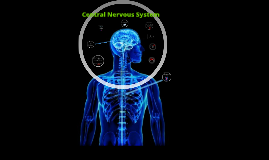
Transcript: The part of the nervous system consisting of the somatic and autonomic nervous system; whose main function is to connect the Central Nervous System to the organs and limbs. Axon bundles that carry messages from/to the brain in the spinal cord. It serves as the tissue that passes messages from gray matter in the nervous system. Third neuron whose main function is to connect sensory and motor neurons by sending neural impulses from the sensory neuron to the motor neuron. Brain and spinal cord. It integrates the information it receives from and coordinates the activity of all parts of the body. Spinal Reflex: A bundle of axons from many neurons. Its primary function is communication, which is achieved through the transmition of signals around the body. Nerve: Gray Matter: Central Nervous System The neurons and neural segments that are in the spinal cord and brain involved in spinal reflexes. It is involved in the control of muscles and sensory perceptions such as sight, sound, hear and taste. Column of nerves in the spine that transmit messages from sensory receptors to the brain; and from the brain to muscles and glands around the body. In charge of transmitting neural signals between the brain and the rest of the body. Nuclei: Plural of ganglion. A group of neural cell bodies situated in the body, not in the brain and spinal cord. Sensory cell bodies that conduct impulses to central nervous system. Ganglia: Spinal Cord: Plural of nucleus. Group of neural cell bodies found in the brain or spinal cord. Its main function is to bound genetic material found in DNA and give the cell a specific function or task. A simple, unlearned response to stimulus that usually involves two neurons: a motor (efferent) and a sensory (afferent). Spinal reflexes function in the central nervous system as the key responses to an external stimulus. This type of reflex can be made to different stimulus. i.e. Closing eyes when dirt gets in them. THE NERVOUS SYSTEM The peripheral System The Central nervous system White Matter: Interneuron: Peripheral Nervous System

Central Nervous System

Transcript: 1. The peripheral nervous system consists of nerves of the body: 31 pairs of spinal nerves extending out from the spinal cord and 12 pairs of cranial nerves extending from the brain. *Ganglia: group of cell bodies outside the central nervous system that carry impulses to involuntary muscles and glands. 3. The autonomic nervous system includes peripheral nerves and ganglia. Temporal lobe: contains the auditory area. The cerebrum is the largest part of the brain! 1. Associative neurons or inerveurons carry impulses from the sensory neuron to the motor neuron. Occipital lobe: houses the visual area and controls eyesight. Thank you for your attention! 1. Communication and coordination system in the body! 2. Sensory neuron, also known as afferent neurons emerge from the skin or sense organs and carry messages or impulses toward the spinal cord and brain. Functions! The Brain! 2. The central nervous system consists of the brain and spinal cord. 2. The brain is the seat of intellect and reasoning. The brain responds to the message and performs the activity. Nervous System Division Central Nervous System Neurons! Parietal lobe: receives and interprets nerve impulses from the sensory receptors for touch, heat, pain, and cold. Frontal lobe: controls the motor functions of humans. The brain understands and interprets the message. Receives messages from stimuli all over the body Cerebral Lobes and Their Functions! 3. Motor neurons or efferent neurons, carry messages from the brain and spinal cord to the muscles and glands.

Central Nervous System

Transcript: - The Parietal lobe plays important roles in integrating sensory information from various senses -The Parietal lobe also plays an important role in the manipulation of objects; portions of the parietal lobe are involved with visual perception Is located in the middle section of the brain Temporal lobe Hemisphere of the Brain Sacrum -Alzheimer's disease is a progressive disease that destroys memory and other important mental functions. -It's the most common cause of dementia — a group of brain disorders that results in the loss of intellectual and social skills. These changes are severe enough to interfere with day-to-day life. The Frontal Lobe The Hemisphere of the brain can be described as being divided into left and right cerebral hemispheres -Supports the thorax and allows rib attachment The four lobes of the brain are the Frontal lobe, the Parietal lobe, Occipital lobe and the Temporal lobe -Extends from the spinal cord -Contains structures such as pons and the cerebellum -Assists in maintaining balance, equilibrium, movement coordination and the conduction of sensory information -The medulla contains the cardiac, respiratory, vomiting and vasomotor centers -It also deals with autonomic, involuntary functions, such as breathing, heart rate and blood pressure. The Central Nervous System The brain can live for 4 to 6 minutes without oxygen, and then it begins to die. No oxygen for 5 to 10 minutes will result in permanent brain damage. Early symptoms of Alzheimer's disease -The Central Nervous system, other known as CNS -Part of the nervous system that integrates information it receives and controls activity of all the body parts of a multicellular animal . Spinal nerves - The left brain is the logical brain -It is responsible for words, logic, numbers, analysis, lists, linearity and sequence. -It controls the right side of your body. -A person who is "left-brained" is often said to be more logical, analytical and objective The Cerebellum Researchers have discovered that those experiencing the blues are more willing to spend more money in an attempt to alleviate their sadness. The Cerebrum -The brain is the most simple organ of a vertebrate -The brain consists of the cerebrum, cerebellum and the medulla -The cerebral cortex is the largest and is estimated to have 15-33 billion neurons Olfaction? Function of the spinal cord Fun Facts - Somatosensory system is also known as the sense of touch. - Gustatory is also known as the sense of taste. -The spinal cord is made up of five sections, the Cervical, Thoracic, Lumbar, Sacrum, Coccyx What is the Central Nervous System The Medulla Functions of the Cerebrum -Most Forward part of the brain -Controls body temperature -Reproductive functions -Eating, sleeping, display of emotions The HindBrain -The MidBrain is associated with vision, hearing, motor control, sleep/wake, arousal (alertness), and temperature regulation Parietal lobe Thoracic -The general function of the spinal cord is to support and allow nerve, blood vessel to pass through vertebral foramina -The cerebellum is Latin for little brain -It is a region of the brain that plays an important role in motor control -It may also be involved in some cognitive functions such as attention and language and in regulating fear and pleasure responses -Difficulty remembering recent events Some difficulty remembering events from the past -Poor judgment and decision making Making a bad decision once in a while -Inability to manage a budget Missing a monthly payment -Losing track of the date or the season Forgetting which day it is and remembering later -Difficulty having a conversation -Misplacing things and being unable to retrace steps to find them Losing things from time to time Lobes of the brain - The Occipital lobe is the visual processing center -The Occipital lobe is divided into several functional visual areas. Each visual area contains a full map of the visual world The spinal cord begins at the occipital bone and extends down to the space between the first and second lumbar vertebrae; it does not extend the entire length of the vertebral column. Occipital lobe _Supports the abdomen Boredom is brought on by a lack of change of stimulation, is largely a function of perception, and is connected to the innate curiosity found in humans. The five sections of the spinal cord -The Central Nervous System is made up of the brain and the spinal cord -The Central Nervous System works together with the Peripheral Nervous System to have a fundamental role in the control of behavior Coccyx -The spinal cord functions primarily in the transmission of neural signals between the brain and the rest of the body but also contains neural circuits that can independently control numerous reflexes and central pattern generators. -The spinal cord has three major functions: as a conduit for motor information, which travels down the spinal cord, as a conduit for sensory information in the reverse direction, and finally as a center for

Central Nervous System

Transcript: Cerebrospinal fluid surrounds, cushions, and protects the brain and spinal cord from trauma. It also assists in the circulation of nutrients to the brain. Epilepsy Mid Brain Hind Brain Central Nervous System Parkinson's Disease The spinal cord is a cylinder shaped bundle of nerve fibers that connects to the brain. The spinal cord runs down the center of the spinal column from the neck to the lower back. Spinal cord nerves transmit information from body organs and external stimuli to the brain. It also sends information from the brain to other areas of the body. The nerves of the spinal cord are grouped into bundles of nerve fibers that travel in two pathways. Ascending nerve tracts carry sensory information from the body to the brain. Descending nerve tracts send information pertaining to motor function from the brain to the rest of the body. Stroke Alzheimer's Disease The hind brain extends from the spinal cord and contains the pons and cerebellum . These parts of the brain control balance and equilibrium, movement coordination, and the conduction of sensory information. The hind brain also holds the medulla oblongata which is responsible for controlling such autonomic functions such as breathing, heart rate, and digestion The brain is the control center of the body. It consists of three main components: the fore brain, the brain stem, and the hind brain. Disorders of The Central Nervous System The Central Nervous System: Brain The central nervous system consists of the spinal cord, brain, and a complex network of neurons. This system of the body is responsible for sending, receiving, and interpreting information from all of the different parts of the body. The nervous system monitors and coordinates internal organ function and responds to changes in the external environment. The mid brain and the hind brain together make up the brain stem . The mid brain is the portion of the brain stem that connects the hind brain to the fore brain. This part of the brain is involved in auditory, visual responses and motor function. The fore brain is responsible for receiving and processing sensory information, thinking, perceiving, producing and understanding language, and controlling motor function. The forebrain contains structures such as the thalamus and hypothalamus which are responsible for such functions as motor control, relaying sensory information, and controlling autonomic functions. It also contains the largest part of the brain, the cerebrum . Most of the actual information processing in the brain takes place in the cerebral cortex . Spinal Cord Multiple Sclerosis All of these disorders can affect memory and the ability to carry out daily activities of life. Spina Bifida

Central Nervous System

Transcript: Our nervous system controls all of our body's functions and activity. The nervous system has two parts: 1. The central nervous system 2. The peripheral nervous system The CNS coordinates and interprets information to determine the best response We will now consider the parts of the CNS - the brain, spinal cord and specialist cells This centralised control allows rapid and coordinated responses to changes in the environment. The spinal cord is a long thin tubular bundle of nervous tissue and support cells that extend down through the spinal canal from the brain. The spinal cord functions primarily in the tranmission of neural signals between the brain and the rest of the body It is the main pathway for information connecting the brain and the peripheral nervous system the spinal cord also contains neural circuits that can independantly control numerous reflexes (like pain perception!) It has three meninges (layers) that cover it: 1. outer dura mater 2. middle arachnoid mater 3. inner pia mater cerebrospinal fluid is found in the subarachnoid space Neurons are specialist cells for the processing and transmission of cellular signals. THE NERVOUS SYSTEM IS THE CONTROL CENTRE OF THE BODY the nervous system has 2 parts (central and peripheral) the central nervous system consists of the brain and the spinal cord the nervous system is made up of neurons or nerve cells there are 3 types of neurons (sensory, inter and motor neurons) sensory neurons send signals to the brain via the spinal cord motor neurons send signals from the brain to the body interneurons act as the 'go-between' the autonomic nervous system is the automatic part of the nervous system and comprises the sympathetic and parasympathetic pathways sympathetic pathway speeds things up parasympathetic slows things down Peripheral nervous system: The spinal cord Types of glial cell: cells that fire together, wire together! The axon write a list of all your daily activities interneurons are the go-betweens, passing messages from between sensory and motor neurons Motor neurone diseases are a group of neurological disorders that selectively affect motor neurones. cells in the peripheral nervous system include sensory neurons that respond to changes n the environment: touch heat pain light sound etc International team creates first high-res map of the human cerebral cortex The Central Nervous System (CNS) - consists of the brain, spinal cord The point for me isn't to develop a map of the brain, but to understand how it works, how the different regions co-ordinate their activity together, how the simple firing of neurons and shuttling around of neuro-transmitters leads to thoughts, laughter, feelings of profound joy and sadness. How many of you would sit up and take note? The axon terminal contains synapses, specialized structures where neurotransmitter chemicals are released in order to communicate with target neurons Glial cells The dendrites of a neuron are cellular extensions with many branches. Their shape and structure is referred to as a dendritic tree. This is where the majority of input to the neuron occurs Phagocyte cells that migrate through the CNS removing foreign matter and degenerated brain tissue the brain is located in our heads, protected by our skull, to be close to the primary sensory apparatus of vision, hearing, balance, taste and smell In 1848, an accidental explosion drove a metal bar completely through the frontal lobes of Phineas P. Gage. Not only did he survive the accident, he never even lost consciousness or any of the clearly-defined functions of the brain. However, over the ensuing years, he underwent a marked change in personality. Formerly described as a reasonable, sober, conscientious person, he became — in the words of those observing him — "thoughtless, irresponsible, fitful, obstinate, and profane". In short, his personality had changed, but his vision, hearing, other sensations, speech, and body coordination were unimpaired. (Similar personality changes have since been often observed in people with injuries to their prefrontal cortex.) The Nervous System Headaches Autonomic nervous system Aim To increase awareness of the nervous system. Outcomes: demonstrate understanding of the nervous system describe the function of the nervous system outline the anatomy and physiology of the nervous system identify the structures and functions of the neurons (nerve cell) demonstrate appreciation of some nervous system diseases remember the last time you experienced pain - describe the feelings. what were your actions? The axon terminal Motor neurons are also part of the peripheral nervous system. They cause a muscle to contract or a gland to secrete Epithelial cells that line the brain and central canal of the spinal cord and form cerebrospinal fluid and aid in its circulation CNS injury In the nervous system, a synapse is a junction that permits a neuron to pass an electrical or chemical signal to another cell. The myelin sheath The

CENTRAL NERVOUS SYSTEM

Transcript: There are 12 pairs of cranial nerves which emerge from the brain itself. General functions 1- Olfaction (I nerve) OLFACTORY 2- Vision (II nerve) OPTIC 3- Eye movement (III, IV, V nerves) OCULOMOTOR, TROCHLEAR, TRIGEMINAL 4- Facial sensation (VI nerve) ABDUCENS 5- Facial expression (VII nerve) FACIAL 6- Hearing and balance (VII nerve) VESTIBULOCOCHLEAR 7- Oral sensation, taste and salivation (IX nerve) GLOSSOPHARYNGEAL 9- Vagus nerve (X) (parasympathetic pathway) VAGUS 10- Shoulder elevation and head turning (XI nerve) SPINAL 11- Tongue movement (XII nerve) HIPOGLOSSAL The motor nuclei of the oculomotor (III) and trochlear (IV) nerves A portion of the sensory nucleus of the trigeminal nerve (V) CNS 1.The central nervous system CNS is responsible for integrating sensory information and responding accordingly.It consists of two main components: -Spinal cord: CONDUIT FOR SIGNALS. -Brain: INTEGRATION OF MOST SENSORY INFO. DEVELOPMENT OF CEREBELLUM -Vermis and Cerebellum hemispheres division into: Cranial anterior lobe b. Caudal middle lobe. -Further divisions (important elements): . Secondary transverse fissure. . Prepyramidal fissure. “Process of fissure and folliation”. RHOMBOENCEPHALO NERVE NUCLEI The dorsal margin of the alar plate is called the rhombic lip. The thin rhombencephalic roof plate consists mainly of tela choroidea. The pia and ependyma form the choroid plexus, which secretes cerebrospinal fluid. The fluid gains access to the subarachnoid space via a single foramen of Magendie and two foramina of Luschka. Cytodifferentiation Of The Cerebellum Development Of Pons 2 pathways. Higher centers of our brain, which consist of cerebellum and the forebrain or procensephalon. HIGHER CENTERS: - Cerebellum - Forebrain - Telencephalon FOREBRAIN OR PROCENSEPHALON ----- 2 Secondary brain vesicles: - Diencephalon In the early embryo, the CNS forms as a relatively uniform tube. The major regions of the brain develop as enlargements at the head end of this tube: 2.The brain and spinal cord share some key anatomic features: - The entire CNS is encased in bone. The brain is within the cranium, while the spinal cord the vertebrae. - The entire CNS is bathed in a cerebrospinal fluid (CSF). - There are two general types of tissue in the CNS: GRAY MATTER: cell bodies,dentrites and axons. WHITE MATTER: mostly axons. BIBLIOGRAPHY 1. Hashimoto M. Development and evolution of cerebellar neural circuits. 2012 Apr; 54(3):373-89. 2. Kulesa, PM; Fraser, SE. Segmentación del cerebelo de vertebrados: análisis del lapsotemporal. 1998, 42 (3): 385-392, 21 3. https://mcb.berkeley.edu/courses/mcb135e/central.html 4. Lasern's human embryology book Adala Sidi,Patxi Santaolalla,Eneko Cabezuelo,Nerea Aedo, Maria Isusi and Neike Murua Facultad de Medicina y Odontología UPV/EHU 02/12/14 DIENCEPHALON - Posterior portion of the forebrain 1st neuromere - prethalamus and hypothalamus - ONLY alar plates ----- 3 subdivisions: 2nd neuromere - thalamus and epithalamus 3rd neuromere - pretectum CENTRAL NERVOUS SYSTEM The medulla oblongata is the lower half of the brainstem. The medulla contains the cardiac, respiratory, vomiting and vasomotor centers. TELENCEPHALON - Rostral brain vesicle of the forebrain - median portion - Consists of 2 lateral outpocketings: - cerebral hemispheres DEVELOPMENT OF CEREBELLUM Cerebellum is dereived from: a. Metencephalic Alar Plates. b. Adjacent Rombic Lips. -Cerebelar primordia. -2th month. -3th month. PROSENCEPHALON -Posterolateral fissure separates the cerebellum into: Cranial portion (developed): vermis & cerebelar hemispheres. Caudal portion (primitive): flocculonodular lobes CRANIAL NERVES METECEPHALON Metencephalon- Rhombomers 1-2: a. Pons b. Cerebellum MESENCEPHALON

Now you can make any subject more engaging and memorable