Blue Circles - Free Prezi Template
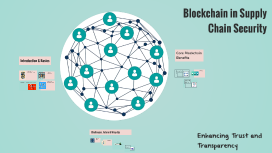
Transcript: Blockchain in Supply Chain Security Core Blockchain Benefits Introduction & Basics Benefits Over Traditional Systems Key Features That Enhance Security Introduction to Supply Chain Security What is Blockchain? Significant reduction in counterfeit goods and unauthorized changes to records. Faster and more efficient auditing processes due to accessible and reliable data. Improved compliance with regulations through immutable records. Lower operational costs by reducing paperwork, intermediaries, and delays. Transparency: All authorized parties can access the same data in real-time. Immutability: Records cannot be altered once confirmed, preventing tampering. Traceability: Products can be tracked back to their origin, verifying authenticity. Smart Contracts: Rules encoded on the blockchain that automatically execute actions Supply chains are complex, involving many parties like suppliers, manufacturers, logistics providers, and retailers. Security issues include counterfeit goods, data manipulation, loss of goods, and lack of traceability. Ensuring transparency and trust throughout the supply chain is crucial for operational efficiency and customer satisfaction Blockchain is a decentralized digital ledger that records transactions across a distributed network of computers. Each transaction is stored in a "block" and linked to the previous one, forming a chronological chain. Once data is entered, it cannot be altered, ensuring immutability and trust. All participants have access to a synchronized version of the data, which enhances transparency. Real-World Use Cases How Blockchain Secures Supply Chains Problems in Traditional Supply Chains IBM Food Trust: Enables end-to-end tracking of food products, increasing food safety and reducing waste. Walmart: Uses blockchain to track pharmaceuticals, ensuring medicines are authentic and not expired. Nike: Uses blockchain through a system called "Cryptokicks" to verify the authenticity of sneakers and prevent counterfeits. Traditional systems are often paper-based or rely on siloed databases, making them vulnerable to human error and fraud. Centralized databases can be manipulated and are a single point of failure. There is limited real-time tracking, leading to blind spots in the supply chain. It's difficult to verify the origin and authenticity of products without a secure and transparent system. Blockchain records every transaction from sourcing to delivery, creating a permanent audit trail. Each step in the supply chain is time-stamped and verified by network participants. Smart contracts can automate actions like payments or approvals when predefined conditions are met. This real-time visibility helps detect fraud, inefficiencies, and anomalies immediately. Challenges, Future & Wrap-Up Challenges and Limitations Enhancing Trust and Transparency Future Outlook High initial setup costs and complexity in integrating with legacy systems. Requires cooperation among all supply chain partners for full effectiveness. Scalability can be an issue with public blockchains handling high transaction volumes. Legal and regulatory frameworks for blockchain are still evolving in many regions. Increased adoption across various industries like pharmaceuticals, agriculture, and electronics. Advancements in blockchain scalability through Layer 2 solutions and private blockchains. Integration with IoT devices for automatic data capture and verification. Enhanced decision-making using AI and analytics on blockchain-generated data. Any questions? Blockchain enhances supply chain security through transparency, immutability, and automation. It helps combat fraud, improves traceability, and increases trust among stakeholders. As adoption grows, blockchain will play a central role in building smarter, more resilient global supply chains.

 Prezi Present

 Prezi Video

 Prezi Design