You're about to create your best presentation ever

Africa Presentation Background

Create your presentation by reusing one of our great community templates.

South Africa: Background Information

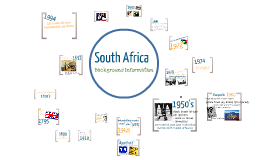
Transcript: Dutch settlement leader Jan van Riebeeck (1619–1677) lands at the southernmost point of Africa in April 1652. Sharpeville 1993 black Boer War British vs. Afrikaners 600 students killed; 1000's arrested Nationalist Party in control colored new generation of protest The Comprehensive Anti-Apartheid Act becomes law. The legislation calls for comprehensive economic sanctions against South Africa and explicit preconditions for lifting said sanctions, including the release of political prisoners like Nelson Mandela. Reagan vetoes the Comprehensive Anti-Apartheid Act, but for the first time in his presidency and the first time since 1973, Congress overrides the veto. South Africa Britain gives independence to Afrikaner-dominated government 1948 Background Information Native blacks believed to be incompetent to rule supremacy 1652 Nazi leanings Slave system established race classifications 1976 1912 Deklerk and Mandela awarded Nobel Peace Prize Nelson Mandela freed Robbens Island Prison 1795 "Apartheid" police fired (69 killed, 150 injured) Government pass laws restricting movement/freedoms of blacks Indian lawyer, Ghandi, thrown off a train for sitting in "white only" seat Britain seized control of Cape of South Africa ANC - African National Congress Thousands turned in travel passes 1960 South Africa expelled from United Nations U.S. boycotts of businesses of South Africa students protested having to speak Afrikaans Afrikaans for apartness 1910 Legal segregation 1994 1986 Black South African job options: - work in mines - domestics 1974 Soweto (Southwest Township) Dutch set up colony white Mandela arrested in 1964 1990 Began nonviolent protest Nelson Mandela heads resistance movement 1st South African Presidential elections 1950's 1976 1700's South Africa expelled from Olympics 1899

Background Presentation

Transcript: 14th Week Consulting interns can be expensive Time and Money Personal Experience Preliminary Design Stage NFPA 101 and NFPA 13 New and Existing Education, Business, and Mercantile Definition of Project This app would be used to provide interns and recent graduates with an outline of guidelines for how to design and review designs of specific occupancies. With the given time frame, I will be writing the information that will go into the app Begin parametric study: Speak with my mentor and Jason to understand more about what critical variables I could concentrate on for this app. Choose those parameters and begin my study Gather information from NFPA 101 and NFPA 13 for new and existing education, business, and mercantile occupancies. By: Breanne Thompson Next Steps (Continued) Finish preparing for Draft of Analysis Pull together and discuss results of project Draw my conclusions and state future work needed Turn in Final Paper! 10th and 11th Week Turn in my parametric study Begin draft of analysis Map out the process of the app for the key elements 15th Week References Next Steps 7th Week Prepare for Final Presentation Summarize my draft of analysis into presentation Work on how to incorporate a live demonstration for my presentation App Development Background Information 8th-9th Week Continuous Process Objective-C for Apple products Java for Android products 6 months of studying Places to Learn: Codecademy, iOS Dev Center, Android Developers Training Hire App Developer will cost thousands Prepare Final Paper Dive into Shark Tank! 1. http://lifehacker.com/5401954/programmer-101-teach-yourself-how-to-code 2. http://www.bluecloudsolutions.com/blog/cost-develop-app/ 6th Week Background Presentation 12th-13th Week

Background of South Africa

Transcript: Apartheid Total Segregation of White People (Afrikaners) from the Native Africans. Wage Bar/Color Bar - Afrikaners are more justly compensated than the natives. Thus dividing the labor force into two factions, creating civil unrest and unequal job opportunities because of racial discrimination. An Economic Study Nelson Mandela with the help of the African National Congress (ANC) worked hard to establish equality among the workers, may it be the white settlers or the natives. The economy was suffering in terms of its labor force productivity caged by the repressive Apartheid. RDP promotes freedom and just compensation to the workers, providing them with enough sustenance for a just living, thereby increasing the productivity of each member of the society. -With the movement of the World Economy, gearing toward Capitalism, it is apparent that putting some of the commanding heights at the hands of the private sector would create a self-sustaining market with prices standardized among themselves. It opens opportunities to start trading more due to relaxed government controls on such things as prices. WHY IT WORKS? Background of South Africa HOW DOES IT WORK? WHY IT WORKS? Economic Issue: Inflation and Unemployment Economic Issue: Unemployment Economic Policy: Growth, Employment and Redistribution RDP works by offering jobs to the natives (including administrative work other than working in the mines), giving proportionate compensation to the workers, abundant and equal job opportunities, thereby increasing productivity. Establishing rapport with other nations, fueling the export trade for minerals. Increasing government expenditures thereby affecting the over-all status of the economy. HOW DOES IT WORK? GOALS: -Socio-economic reform = rights of the workers -Reduce the wealth distribution gap (lavish richness vs abject poverty) -Eradicate repressive labor policy, apartheid and sexism. -Equality among others (Socialism) -Privatization of the parastatals -Relaxed marker controls of the government -Reduced government spending -Work hand in hand with the private sector South Africa Former British Colony Rich in Mineral Deposits (Gold and Diamonds) Market relies heavily on exports Economic Policy: Reconstruction and Development Programme World War 1 + Stock Market Crash of 1929 = Recession and Depression of the World Economy -Market-oriented economy(Hayek foundations) -Release of some parastatals (Commanding Heights owned by the government) -Relaxed Market Controls, Government's role would only be as facilitator. -Over-all it didn't depart much from RDP's goal to abolish apartheid. Thank you!

Background Presentation

Transcript: Real action and accountability Amnesty International Non-state actors/ Rebel Groups?? ...and what about men?? ignoring male rape victims? would rape exist without a man? Weapons of War: Rape UN as an Arena - NGO's - Discussion and dialogue Arena Instrument Actor Critical Thinking Weapons of War: Rape UN as an instrument UNSC Resolution 1820 (2008) UN as an Actor - UN Action Against Sexual Violence in Conflict Weapons of War: Rape Problems with 1820 "Roles and Functions of International Organizations" "Sexual violence, when used as a tactic of war in order to deliberately target civilians or as a part of a widespread or systematic attack against civilian populations, can significantly exacerbate situations of armed conflict and may impede the restoration of international peace and security… effective steps to prevent and respond to such acts of sexual violence can significantly contribute to the maintenance of international peace and security" (UNSC Resolution 1820, p. 2)" http://www.stoprapenow.org/uploads/advocacyresources/1282164625.pdf Background Presentation- Kristin Mann Weapons of War: Rape Brief Insight - used to manipulate social control - destabilize communities - weaken ethnic groups and identities Examples: - Sudanese Militia - Rwanda Genocide - DRC Critical Thinking http://www.womenundersiegeproject.org/blog/entry/the-need-for-numbers-on-rape-in-warand-why-theyre-nearly-impossible-to-get Critical Thinking Increased Data Collection by international organizations - determine humanitarian responses - ensures justice and reparation - provides recognition and dignity

Africa Presentation

Transcript: What's this mean for Africa? "China’s approach to our needs is simply better adapted than the slow and sometimes patronizing post-colonial approach of European investors, donor organizations, and non-governmental organizations. In fact, the Chinese model for stimulating rapid economic development has much to teach Africa.” -Abdoulaye Wade, 2008 "We have turned East where the sun rises, and turned our backs to the West, where the sun sets." -Robert Mugabe “Business is business. We try to separate politics from business ... I think the internal situation in the Sudan is an internal affair.” - Deputy Foreign Minister Zhou Wenzhong Motivations: Energy Security (10% of oil from Africa) New markets (esp. for services) African backing in reforming international institutions Other raw materials Security concerns (Indian Ocean) Competition with China Aid/Assistance Relatively small part of India's aid (less than 5% of India’s total aid giving) Focus on technical assistance, esp. in health, technology,pharmaceuticals, infrastructure (related to resource extraction) Tend to work with regional groups (AU, NEPAD, ECOWAS, COMESA) Given through EX-IM bank, Ministry of External Affairs, soft power Trade •Expected to pass $50 billion •Moved from trade deficit to trade surplus with Africa •Export to: South Africa, Nigeria, Egypt as large, consistent export destinations refined petroleum products, medication, iron products •Import from: South Africa (largest), Morocco, Egypt, Chad, Sudan crude and refined petroleum as largest (66% in 2006), agricultural products, some manufacturing •India and SACU in talks for PTA •Indian Government offered duty-free tariff preferences under the least developed country preferences to 34 African nations 2008 Tata companies in Africa: Jaguar Land Rover SA Neotel Taj Hotels and Resorts  Taj Cape Town  Taj Pamodzi Tata Chemicals Magadi Tata Consultancy Services, SA Tata Motors Tata Power  Cennergi Tata Steel KZN Tata Africa Holdings (SA)  Blackwood Hodge Zimbabwe  Tata Africa Cote D’Ivoire SARL  Tata Africa Senegal  Tata Africa Services (Nigeria)  Tata Africa Steel Processors  Tata Automobile Corporation SA  Tata Ghana  Tata Holdings Mozambique LDA  Tata Holdings Tanzania  Tata Kenya  Tata Zambia "Historic debt" to Africa - Lula reference to the 3.5m African slaves shipped to Brazil Diversifying its markets - Africa needs infrastructure --> Brazil has lots of construction firms Africa has oil and minerals --> Brazil has myriad firms capable of extracting them Land and opportunities for Brazil's agribusiness firms Growth of Africa's middle class --> millions of potential new customers. Has increased from US$69 billion in 2001 to US$214 billion in 2009 However, Africa has not been a major destination for FDI from private Brazilians firms - only $281 million in 2001 and $125 in 2009 Largest concentrations of Brazilian FDI - South Africa and Angola Focused on energy, mining, and infrastructure. Brazilian companies as employers - Firms are quick to point out that "unlike China", they employ mostly locals to work for them. Brazilian construction firm Odebrecht is one of the largest private employers in Angola. Bilateral trade between Brazil and Africa doubled between 2000 and 2009, but fell between 2008 and 2010 due to declines in commodity prices. Exports to Africa between 2000 and 2010 - (US$1.3 billion to US$9.1 billion) resource-intensive manufactured goods, technological products, and primary products (Nearly 20% of these were to South Africa.) E.g.: Sugar and honey, rice, meat, vegetable oils, refined oil, and vehicles and automotive parts. Imports from Africa - increased more than fourfold between 2000 and 2008 (US$2.9 billion to US$15.7) Primarily primary products e.g. Crude oil from Nigeria Constraints/Concerns Inexperience of Brazilian firms abroad Lack of good infrastructure Poor communication channels and transportation for people and products Largely technical expertise and technology - tropical disease fighting and agriculture Examples: Mozambique - Brazil's government is opening a plant to make antiretroviral drugs to fight the AIDS epidemic. Brazil is lending $150 million to Kenya for infrastructure purposes in Nairobi. May 2012 - Brazil's top investment bank BTG Pactual unveiled plans to raise $1 billion to create the world's biggest investment fund for Africa, focusing on areas such as infrastructure, energy and agriculture. Trade and Investment Relations - Tanzania and China Since the 1960s - China has received more than 100 cooperation projects costing an estimated $2 billion USD Economic relations have gradually changed from aid and technical assistance to more flexibly given loans. China's largest and most expensive foreign aid project as of 2009 - Tanzania-Zambia (TAZARA) railway linking (1970-1976) Tanzanian govt. and the China Council for the Promotion of International Trade (CCPIT) signed a Memorandum of Understanding in March 2012 to improve trade and investment

Now you can make any subject more engaging and memorable