The best AI deck generator for someone who needs a complete presentation in minutes combines prompt-to-deck automation with output quality that actually persuades an audience. In 2026, tools like Presentations.AI, Canva, and Prezi lead the category, each excelling in different areas: raw speed, design polish, or narrative impact. The right choice depends on whether you need a deck that's simply done fast or one that's fast and wins the room.
Fast presentation creation has become the baseline expectation for professionals juggling tight deadlines, last-minute meetings, and high-stakes pitches. The prompt-to-deck workflow, where you type a topic and receive a complete, designed presentation, has matured significantly, but not all AI tools deliver equal results. This guide compares the top AI presentation makers of 2026 across speed, quality, and persuasive capability, helping you choose the tool that matches your actual needs rather than just your timeline.
What Is Prompt-to-Deck AI and How Does It Work?
Prompt-to-deck AI is a workflow where you enter a topic, outline, or brief description and the tool automatically generates a complete presentation with slides, text, visuals, and design elements. This approach eliminates the traditional process of building slides one by one, handling layout decisions, and sourcing imagery manually.
The core mechanism works in three stages. First, the AI interprets your prompt to understand the subject matter, audience, and purpose. Second, it generates a logical slide structure with headings, supporting points, and transitions. Third, it applies professional design themes, selects relevant visuals, and formats everything into a cohesive deck.
Modern prompt-to-deck tools have moved beyond simple text generation. They now incorporate smart layout engines that adapt to content length, image libraries that match visual style to topic, and brand customization options that maintain consistency across presentations. For a deeper look at how these systems function, explore how AI-generated presentations have evolved to handle increasingly complex content requirements.
The practical result is that creating presentation slides that once took hours now takes minutes. You provide the direction; the AI handles execution. However, the quality of that execution varies dramatically between tools, and that distinction matters when your presentation needs to do more than simply exist.
Top AI Presentation Makers Compared for Speed and Quality
The leading AI presentation makers in 2026 each prioritize different strengths, making direct comparison essential for choosing the right tool. Speed alone doesn't determine value. Output quality, editing flexibility, and presentation format all influence whether a tool actually serves your needs.
| Tool | Speed | Design Quality | Persuasive Capability | Best For |
|---|---|---|---|---|
| Presentations.AI | Fastest (under 60 seconds) | High polish, template-driven | Limited narrative control | Quick internal decks |
| Canva | Fast (1–2 minutes) | Strong visual variety | Moderate, linear format | Marketing and social content |
| Prezi | Under 8 seconds to first deck | Highest, designer-quality themes trained on 500M+ presentations | Strongest narrative structure | Pitches and high-stakes presentations |
| PPT.AI | Very fast | Functional, basic styling | Minimal | Simple informational slides |
| Pitch | Moderate | Professional, brand-focused | Good for team alignment | Collaborative business decks |
Presentations.AI and PPT.AI compete primarily on raw speed, generating complete decks in under a minute from minimal input. These tools excel when you need something presentable immediately and plan to deliver straightforward information without complex persuasion goals.
Canva brings its design ecosystem strength to AI presentations, offering extensive visual customization and template variety. The platform works well for marketing teams and content creators who prioritize visual appeal and already operate within Canva's broader toolkit.
Prezi differentiates through its focus on persuasive structure, guiding presenters through a narrative arc rather than a sequence of static slides. Prezi AI generates a complete deck in under 8 seconds and applies design that goes beyond generic templates. Instead of picking a color scheme, you get layouts shaped by 500 million presentations worth of design expertise, so the output looks like a designer customized it for your topic. Chat-based refinement lets you iterate on structure, copy, and design through natural conversation. This approach proves particularly valuable for investor pitches, client presentations, and any scenario where you need to adapt your flow based on audience reactions.
For sales-focused professionals evaluating these options, AI slides for sales teams offers specific guidance on matching tool capabilities to revenue-driving presentation needs. Those wanting an extended comparison across more platforms can explore the top AI presentation makers for every need.
When to Create a PowerPoint Presentation vs. an Interactive Presentation
The decision to create a PowerPoint presentation versus an interactive presentation depends on your delivery context, audience expectations, and what you need the presentation to accomplish. Traditional linear slides work for some situations; dynamic, structured formats work better for others.
PowerPoint and similar linear formats suit scenarios where you control the pace completely, your content follows a strict sequence, and your audience expects a conventional slide-by-slide experience. Internal status updates, compliance training, and standardized reports often fit this mold. The format is familiar, predictable, and compatible with virtually every meeting platform and device.
Structured, zoomable presentations become the stronger choice when you need to respond to audience questions by jumping to relevant sections, when your content has natural hierarchies or relationships worth visualizing, or when engagement and retention matter more than simply conveying information. Pitch meetings, strategy presentations, and educational content benefit from the flexibility to navigate based on what resonates with the room.
The practical difference shows up in outcomes. A linear deck delivers information in order. A Prezi presentation lets you guide your audience through a clear argument, emphasize what matters to each specific audience, and demonstrate command of your material by moving fluidly between topics. For professionals exploring alternatives to traditional slide formats, PowerPoint alternatives provides a comprehensive overview of options beyond the standard approach.
Creating this kind of structured presentation no longer requires advanced design skills or hours of manual work. Prezi AI handles the structural complexity so you can focus on the narrative you want to deliver.
Best AI Decks for Asynchronous and Recorded Presentations
Asynchronous presentation needs have grown substantially as remote work, global teams, and investor outreach across time zones have become standard. The best AI deck tools for these use cases combine fast generation with features that support recorded delivery and self-guided viewing.
An asynchronous presentation must work without you present to explain it. This means the deck itself needs to carry the narrative, provide context that would normally come from your spoken delivery, and maintain engagement without live interaction. Not all AI presentation tools account for this. Many optimize for live delivery where the presenter fills gaps the slides leave open.
For recorded presentations, the ability to add voiceover, embed video, and control pacing becomes essential. Tools that support recording directly within the platform, or integrate smoothly with screen recording workflows, reduce friction significantly. You can record a presentation in PowerPoint using built-in features, and you can record in Google Slides through third-party integrations, but purpose-built AI presentation tools increasingly offer native recording capabilities.
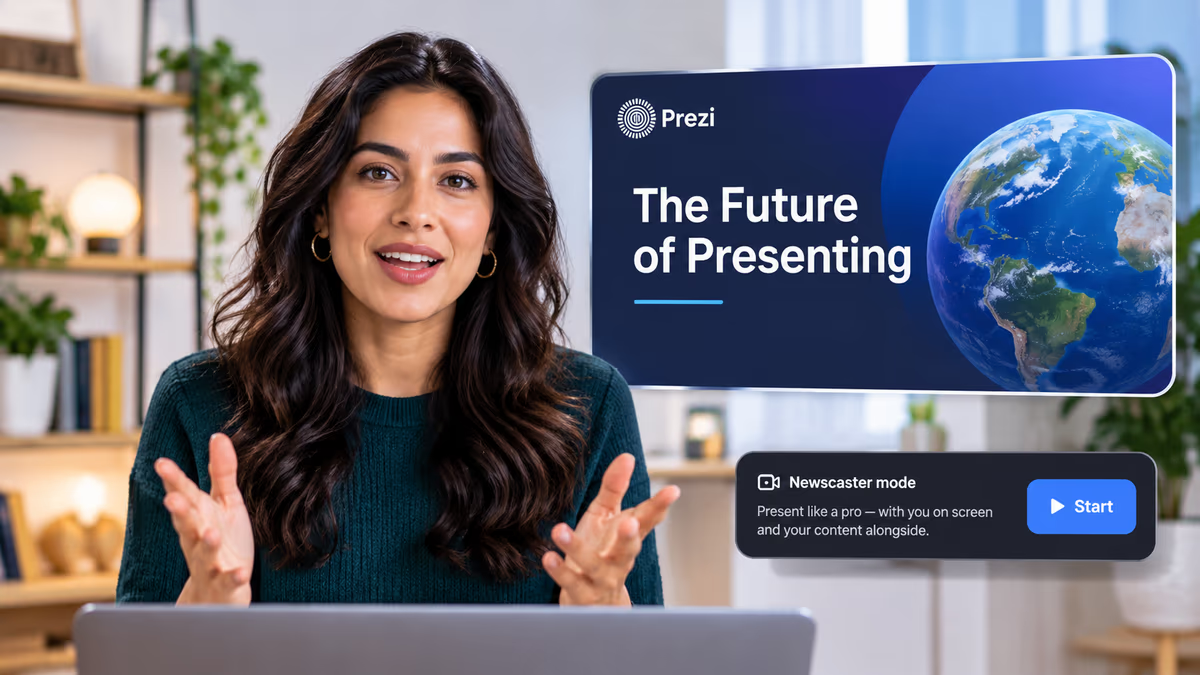
Prezi excels in this category through its video presentation format, which combines your on-camera presence with your slides in a unified viewing experience. Prezi also provides viewer analytics so you can track which slides held attention, where viewers dropped off, and how your deck performed after it left your hands. This approach works particularly well for investor updates, sales outreach, and training content where personal connection matters even without live delivery. For workflows involving ChatGPT and similar tools, ChatGPT presentation creation explains how to leverage conversational AI for async content development.
The key evaluation criteria for async-focused tools include: native recording support, viewer analytics to track engagement, the ability to update content without re-recording, and sharing options that don't require recipients to download software or create accounts.
Why Fast Isn't Enough: Choosing AI That Delivers Results
Speed solves the time problem but creates a new risk: presentations that exist but don't perform. The cost of a forgettable presentation, including lost deals, weak first impressions, and slides that don't survive the room, often exceeds the time you saved creating it.
Professionals frequently discover this the hard way. A deck generated in 45 seconds looks complete, but when it lands in front of investors or clients, it reads as generic, fails to differentiate, and doesn't guide the audience toward the conclusion you need them to reach. The presentation happened; the outcome didn't.
The distinction between fast and effective comes down to three factors:
Narrative structure matters. AI tools that simply arrange information on slides produce decks that inform but don't persuade. Prezi AI is trained on 500 million presentations, so it understands what makes audiences move toward decisions, not just what makes slides look organized. For high-stakes scenarios like fundraising, AI for pitch decks demonstrates how to craft investor-ready presentations that combine speed with strategic impact.
Design quality signals credibility. Generic layouts and stock imagery tell your audience you didn't invest effort in this presentation, which implies you might not invest effort in the relationship or project either. Prezi AI draws on 500 million presentations worth of design expertise to produce layouts that look like a designer customized them for your content, not like you picked from a dropdown menu. The baseline quality is high from the first generation, not after hours of manual refinement.
Flexibility during delivery separates adequate from excellent. When an investor asks about your go-to-market strategy mid-presentation, can you jump directly to that section? When a client fixates on pricing, can you expand that topic without awkwardly clicking through irrelevant slides? Prezi's structured format handles these moments gracefully; rigid linear decks force you to say "I'll get to that" or lose your place entirely.
The professionals who consistently win rooms have learned that the right question isn't "how fast can I create this?" but "how fast can I create something that actually works?"
Create Presentations That Win with Prezi
Prezi combines AI-powered fast presentation creation with the persuasive structure and visual flexibility that high-stakes presentations demand. Trusted by 170 million users across 195 countries, the platform generates complete decks from prompts in under 8 seconds. Rather than applying a generic look, Prezi AI draws on a training dataset of 500 million presentations to produce design that feels like it was made for your specific content, not pulled from a preset menu.
The workflow starts simply: describe your presentation topic, and Prezi AI builds a structured deck with logical flow, relevant visuals, and design shaped by real presentation expertise. From there, you refine through chat-based conversation, adjusting emphasis, adding your perspective, and customizing the narrative path for your specific audience. The result is a presentation created in minutes that performs like one crafted over hours.
Prezi's Your Designer feature takes this further for teams, applying your brand's colors, fonts, and visual identity automatically so every deck your team generates is on-brand without manual effort.
For professionals evaluating whether Prezi fits their needs, is this the best AI presentation maker of 2026 offers a detailed breakdown of capabilities and comparisons. Those ready to experience the workflow firsthand can create with Prezi AI and see how prompt-to-deck generation works within a platform built for persuasion.
The presentation examples emerging from Prezi users demonstrate what becomes possible when speed and persuasion combine: pitch decks that adapt to investor questions in real time, sales presentations that zoom into product details on demand, and training content that lets viewers explore topics at their own pace. These formats represent the next evolution beyond static slides, presentations that respond to their audience rather than simply playing in sequence.
Fast presentation creation has become table stakes. The competitive advantage now belongs to professionals who create fast and create presentations that actually win.
Frequently Asked Questions
What is the fastest way to create a presentation with AI?
The fastest way to create a presentation with AI is to use a prompt-to-deck tool where you enter your topic or outline and receive a complete, designed presentation in seconds. The workflow involves three steps: input your subject and key points, let the AI generate slides with structure, text, and visuals, then make any final refinements before presenting. Prezi AI generates a first deck in under 8 seconds and supports chat-based refinement so you can iterate without starting over. Tools like Presentations.AI and Canva also support this workflow with varying strengths in speed versus output quality.
Can AI create a PowerPoint presentation automatically from a prompt?
Yes, AI can create a PowerPoint presentation automatically from a prompt. You provide a topic, brief description, or outline, and the tool generates a complete deck with slide titles, body content, visual elements, and consistent design formatting. Most AI presentation makers either export directly to .pptx format or offer compatible alternatives. The quality of automatically generated content varies between tools, so reviewing and refining the output before presenting remains important.
What should I look for in an AI presentation maker for 2026?
Look for speed of generation, design quality, persuasive structure, and format compatibility with your delivery needs. Evaluate whether the tool produces generic output or polished, customizable decks built around a clear narrative. Consider whether you need simple linear slides or a format that supports audience-driven navigation. Check for features supporting your workflow: brand customization through tools like Prezi's Your Designer, viewer analytics, recording options, collaboration tools, and export formats. The best choice depends on whether you prioritize raw speed or presentation outcomes.
How do AI deck tools handle design, layout, and slide structure automatically?
AI deck tools analyze your input to determine content hierarchy, then apply design rules that govern spacing, typography, color schemes, and visual balance. They select layouts based on content type. Text-heavy slides get different treatment than data visualizations or image features. Smart layout engines adapt to content length, preventing overcrowded slides or awkward empty space. Prezi AI draws on a training dataset of 500 million presentations to produce layouts that go beyond generic presets, applying design decisions that reflect how successful presentations are actually built.
Can you record or share an AI-generated presentation without presenting live?
Yes, most AI presentation platforms support asynchronous sharing and recording. You can record presentation narration directly within many tools, export video files for distribution, or share links that let viewers navigate the deck independently. Prezi offers video presentations that combine your on-camera presence with slides, plus viewer analytics so you can track engagement after sharing. These options serve remote teams, investor outreach across time zones, and any scenario where live delivery isn't practical.
How do AI presentation tools compare to building slides manually in PowerPoint or Google Slides?
AI presentation tools reduce creation time from hours to minutes by automating structure, design, and content generation. Manual building in PowerPoint or Google Slides offers maximum control but requires design skills and significant time investment. AI tools handle the baseline work; you refine the output. For simple presentations, AI delivers comparable quality faster. For complex or highly customized needs, AI provides a strong starting point that you enhance manually. Prezi's chat-based refinement makes this iteration especially efficient, letting you adjust structure and copy through conversation rather than manual slide editing.
What are some examples of multimedia AI presentations?
Multimedia presentation examples include pitch decks combining video introductions with interactive data visualizations, training presentations with embedded quizzes and branching paths, and sales decks featuring product demos alongside customer testimonial clips. Additional formats include zoomable topic maps where viewers explore content at their own pace, recorded presentations with synchronized speaker video, and interactive reports where stakeholders drill into metrics that interest them. These formats move beyond static slides to create engaging, responsive presentation experiences.