Soccer Ball
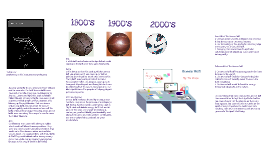
Transcript: 1800's 1900's 2000's According to legend early balls could have been made from human skulls. This piece of technology was invented because it was a fun game to play and because people loved to kick balls around. Humans use balls to kick around in their villages and for exercise. The first soccer balls were made out of skulls or pig and cow bladders. By 1862, H.J. Lindon developed the first inflatable rubber bladder for soccer balls. This was a great improvement but people got lung disease from blowing up the pig's bladder. This new device helped keep balls hard and oval. For soccer players quality was determined on how well the balls retained their shape. Many top grade soccer balls were now using the rump of a cow to cover the rubber bladders. 1900 The bladders were made with stronger rubber which could withstand heavier pressure. They were now covered with heavy brown leather, this would make them bounce easier and could be kicked easier. The major problem with these balls is that they would absorb water during a rainy game. This would end up causing head injuries because of the weight that the ball holds. 1951 A white ball was introduced so spectators could easily see the ball when they used flood lights. 1960's In the 1960's is when the first synthetic soccer ball was produced. It was made up of leather patches sewn together and it was known as the "Buckyball" designed by architect Richard Buckminster Fuller. The shape is made up of 20 hexagons, 12 pentagons, and triangles which can be fitted together to make a round surface. The black spots serve the purpose of helping players perceive any serve. 2000 and Beyond Soccer balls continue to develop in design and function. They are in the process of developing a ball that is flight accurate, water proof, fast in flight, does not absorb energy, soft feel, and is safe for the head. The newest technology is working on greater stability and durability, and also performance and cold weather. The bladders are now a carbon latex material for good acceleration. Benefits of the Soccer Ball 1. Through advancements in bladder and covering it has become safer for doing headers. 2. The technology of the synthetic covering helps in accuracy in kicking the ball. 3. Changing from animal hide to synthetic materials does not absorb as much water as it did originally. Detriments of the Soccer Ball 1. The soccer ball still causes injuries to the head because of its weight. 2. The soccer ball could be changed to brighter colors to make it visually easier to see in low light conditions. 3. The soccer ball needs to transfer energy throughout its panels in the future. The inventions that have changed the soccer ball from animal skin to high-tech synthetic leather has made it safer for the players so there are less injuries, has made it more accurate so the sport of soccer has become faster and more exciting. With each new advancement soccer as grown into the sport it is today. Picture of positioning of the hexagons and pentagons. http://www.football-bible.com/soccer-info/who-invented-the-soccer-ball.html http://news.sportslogos.net/wp-content/uploads/2012/07/Screen-Shot-2012-07-05-at-08h42.23--590x563.png Soccer Ball Technology, Developments, News and Innovations. Digital image. Developments. N.p., n.d. Web. 31 Jan. 2013. How has the soccer ball changed? When? By: Tim Maupin The Soccer Ball Today This Technology was invented in 1836. Charles Goodyear is considered to be the inventor of the modern day soccer ball. The soccer ball has changed from having it be made out of animal skin and rice to rubber and now into synthetic leather. They use synthetic leather because leather absorbs water which makes it heavy and it is harder to play soccer because of its weight. Who? Zinedine Zidane The soccer ball today is used by many people. Soccer Ball Bibliography

 Prezi Present

 Prezi Video

 Prezi Design