You're about to create your best presentation ever

Realistic Heart Background For Presentation

Create your presentation by reusing one of our great community templates.

Background Information for Heart of Darkness

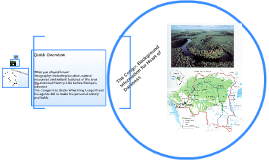
Transcript: 3. The Congo Free State Soon a revolt broke out due to the cruel conditions and slave labor Leopold sent his troops into the villages to exterminate the young men To make sure bullets weren’t wasted the soldiers were expected to return with the severed right hands of those they killed. The Congo Free State The Congo Free State : “The Profit Imperative” The Congo Free State Geography What you should know: Geography- Including location, natural resources and natural features of the area Pre-Colonial History- Life before Europe’s takeover The Congo Free State- What King Leopold and his agents did to make his personal colony profitable Imperialism The ability to use the river to gain access to the ivory and rubber rich interior made the Congo a coveted area for colonization. As European nations negotiated and agreed to respect each others’ claims to African territory, Leopold made his claim for the Congo. The Human Rights Movement Leopold drove the slave traders out of the country, which he portrayed as a great humanitarian act. In reality, however, he did it to gain control of the region. He then paid his ‘agents’ in the country a percentage of the profits, encouraging them to make the trade more and more profitable. He also authorized the use of as much force as was deemed necessary. Pre-Colonial Congo Often, however, the soldiers could not meet quotas, or had to justify bullets spent on hunting, and so would cut the hands off of living women and children. During the years from 1895-1908 it is estimated that 8-10 million people died due to murder, mistreatment and starvation. The Belgian Government ended the worst of the atrocities, but still controlled the fate of the African natives “For their own good.” The African natives were never consulted about their future 2. Pre-Colonial Congo The colony “belonged” not to Belgium, but to Leopold personally, making him the only individual to ever colonize a country. Congo River Village Ne Vunda, Kongolese ambassador to the Vatican, 1608 The Congo Free State Public pressure eventually forced Leopold to sell the Congo Free State to the Belgian government. It became The Belgian Congo in 1908 Quick Overview The Congo: Background Information for Heart of Darkness The Congo Free State The Kingdom of the Congo (Kongo) According to Portuguese explorers the kingdom was a sophisticated and well run state, an imperial federation Known for advanced working in copper and iron Rich in ivory and rubber Leopold II (1835-1909), King of Belgium from 1865 to 1909, infamous founder of the Congo Free State Agents ‘encouraged’ young men to work by holding their wives and children captive until each man’s quota was met. Many who resisted were killed on the spot. Others were beaten with cruel whips called chicotte, made from dried hippo hide with sharp edges. The main geographic feature is the Congo River Fifth longest river in the world Imperialism: The policy of extending a nation's authority by territorial acquisition or by the establishment of economic and political hegemony (the predominant influence, as of a state, region, or group, over another or others) over other nations. Includes the system, policies, or practices of such a government. “Robbery with violence, aggravated murder on a great scale.” Heart of Darkness, page 70 Slavery Slavery was part of the culture of the Congo Originally slaves were captured during warfare, were criminals, or were debtors who could earn back their freedom Eventually, Muslim slave traders began to sell their slaves to European traders for export to the Americas These treaties, along with Leopold’s assurances that his goal was to end the practice of slavery, and a promise that the Congo would remain a free trade area, led the European countries to recognize Leopold’s claim to the territory in 1885. For the first few years of Leopold’s rule his colony did not turn a profit. Soon the idea of free trade was abandoned and the natives could only trade with Leopold’s representatives, with 50% of the profits going to Leopold himself. In order to up the profits it became necessary to make use of cheap labor (gathering rubber is very labor intensive). Continental Context Leopold sent the famous explorer of Africa, Henry Morton Stanley, to negotiate treaties with the natives. Native chiefs were offered trinkets or cloth if they would place an X on a document in foreign tongue. Geography The Berlin Conference, 1884-1885

Background Information for Heart of Darkness

Transcript: 3. The Congo Free State Congo River The main geographic feature is the Congo River Fifth longest river in the world Ne Vunda, Kongolese ambassador to the Vatican, 1608 What you should know: Geography- Including location, natural resources and natural features of the area Pre-Colonial History- Life before Europe’s takeover The Congo Free State- What King Leopold and his agents did to make his personal colony profitable Quick Overview The colony “belonged” not to Belgium, but to Leopold personally, making him the only individual to ever colonize a country. Leopold sent the famous explorer of Africa, Henry Morton Stanley, to n egotiate treaties with the natives. Native chiefs were offered trinkets or cloth if they would place an X on a document in foreign tongue. These treaties, along with Leopold’s assurances that his goal was to end the practice of slavery, and a promise that the Congo would remain a free trade area, led the European countries to recognize Leopold’s claim to the territory in 1885. Continental Context The Congo Free State : “The Profit Imperative” Geography Soon a revolt broke out due to the cruel conditions and slave labor Leopold sent his troops into the villages to exterminate the young men To make sure bullets weren’t wasted the soldiers were expected to return with the severed right hands of those they killed. The Congo Imperialism: The policy of extending a nation's authority by territorial acquisition or by the establishment of economic and political hegemony (the predominant influence, as of a state, region, or group, over another or others) over other nations. Includes the system, policies, or practices of such a government. “Robbery with violence, aggravated murder on a great scale.” Heart of Darkness, page 70 The Belgian Government ended the worst of the atrocities, but still controlled the fate of the African natives “For their own good.” The African natives were never consulted about their future The Congo Free State The ability to use the river to gain access to the ivory and rubber rich interior made the Congo a coveted area for colonization. As European nations negotiated and agreed to respect each others’ claims to African territory, Leopold made his claim for the Congo. 1. Geography Congo River Village The Human Rights Movement The Congo Free State The Congo Free State The Congo Free State Often, however, the soldiers could not meet quotas, or had to justify bullets spent on hunting, and so would cut the hands off of living women and children. During the years from 1895-1908 it is estimated that 8-10 million people died due to murder, mistreatment and starvation. 2. Pre-Colonial Congo The Congo Free State : “The Profit Imperative” The Kingdom of the Congo (Kongo) According to Portuguese explorers the kingdom was a sophisticated and well run state, an imperial federation Known for advanced working in copper and iron Rich in ivory and rubber The Congo Free State The Berlin Conference, 1884-1885 Pre-Colonial Congo Imperialism Agents ‘encouraged’ young men to work by holding their wives and children captive until each man’s quota was met. Many who resisted were killed on the spot. Others were beaten with cruel whips called chicotte, made from dried hippo hide with sharp edges. Background Information for Heart of Darkness Leopold drove the slave traders out of the country, which he portrayed as a great humanitarian act. In reality, however, he did it to gain control of the region. He then paid his ‘agents’ in the country a percentage of the profits, encouraging them to make the trade more and more profitable. He also authorized the use of as much force as was deemed necessary. Public pressure eventually forced Leopold to sell the Congo Free State to the Belgian government. It became The Belgian Congo in 1908 The river was of vital interest to European powers because it and its tributaries represented a 7,000 mile series of connected waterways, a highway to the African interior For the first few years of Leopold’s rule his colony did not turn a profit. Soon the idea of free trade was abandoned and the natives could only trade with Leopold’s representatives, with 50% of the profits going to Leopold himself. In order to up the profits it became necessary to make use of cheap labor (gathering rubber is very labor intensive). Geography The Congo Free State Slavery Slavery was part of the culture of the Congo Originally slaves were captured during warfare, were criminals, or were debtors who could earn back their freedom Eventually, Muslim slave traders began to sell their slaves to European traders for export to the Americas Leopold II (1835-1909), King of Belgium from 1865 to 1909, infamous founder of the Congo Free State

Heart of Darkness Background Presentation

Transcript: The World's Earliest Civilizations are thought to have originated in Africa. The 1st people to live in Africa were what we call Cavemen (Neolithic Culture). In 8000- 3000 BC we see changes in dress and lifestyle. a hand held plow was used in this time period in Egypt. Around 3100 BC the first dynasty of Egypt was created after a man unified the city. This man's name is disputed but it is believed his name is either Menes or Narmer. Between 7000 BC and 3000 BC temperatures where the Sahara desert is now began to rise and made the area inhospitable. Egypt and Ethopia began to rise as civilizations shortly after the Sahara Desert was formed. 2650 BC: 1st pyramid built for King Djoser by Imhotep 2600- 2500 BC: Pyramids of Giza and Great Sphinx built 2300 BC: Pyramid building stopped for 300 years Around 1700 BC is when researchers believe the Israelites were held captive in Egypt (Moses) 1332-1323 BC King Tut Reigned 1279 BC: King Ramesses II ruled for 60+ years. Known as one of the most powerful pharaohs. 332 BC: Alexander the Great founds the city of Alexandria, Egypt a few years after the last Pharaoh (Nectanebo II) falls under Persian invasion. 30 BC Cleopatra VII and Antony commit suicide and Egypt falls to Roman Empire. Other Tribes: Teke =Mostly hunters and fishermen = Well known for their Teke masks which were used on speacial occasions such as weddings, funerals and initiations Fang =Known for their "guardian figures" they would attach to wooden boxes that contained the bones of their ancestors. =Known for being a very aggressive tribe and for their past as a cannibal tribe. =Leader of the village also serves as the spiritual leader. Berber Have lived in Africa since the earlist recorded time. Very scattered across Africa Are known as Berbers because of the language and their intermingling with the Arabs. Bakongo Largest Ethnic group in Congo- 10,200,00 Known as the Kongo people or the Congolese Speak Kikongo Amhara =The Amhara tribe is the biggest ethnic group in Ethiopia. =They are Coptic Monophysite Christians and have been for many centuries. This is not the Christian belief we all know today. Their beliefs are more intertwined with pagan worship as well. = They believe in "zar and adbar" spirits that give emotional and physical well being unless the worshipper fails to recognize them with rituals. Bobo =The Bobo people are known for their detailed masks that were commonly used during a young man's coming of passage. = Speak their own language named after their tribe, are centralized near Mali = In the Bobo tribe it is considered absurd to put political power into one single person in the tribe which is why they do not have a political system. = women of wore bronze anklets to protect from evil spirits Zulu People =The Zulu people are known for their bead work and basketry and have a unique fashion sense and architecture style that has been focused on for years. = They live in the South Africa and is still a populous tribe of 3 million today Kikuyu =Kenya's largest ethnic group =has 42 different cultures within the tribe itself =Guests are welcomed in a true Kikuyu style and is offerered a local drink called the "Muratina" from a horn. 1800's 1810's 1820's 1830's 1840's 1850's 1860's 1870's 1880's 1890's There are over 7400 tribes in Africa at present date. Time of Egypt :) Bantu speaking tribes The first scientific institute was established at The Cape. It was called the Royal Observatory. The British also made progress to settling thanks to the Zulu king who allowed them to make a permanent settlement at Rio De Natal. Tensions between the English and Dutch settlers in southern Africa grow stronger and the Dutch are banned from the British Court System in the settlements. The Zulu natives continue to feud with other natives including the Pondos in 1828 Economy 1865 South African has an Economic depression The British still have a big influence on the economic situation of Africa so much so that the first bank for South Africa is established in London. **Random Fact** Ostriches are domesticated in South Africa (: "Bibliography" http://www.historyworld.net/timesearch/default.asp?conid=1062&gtrack=mtop1 http://history-world.org/africa1.htm http://www.ezakwantu.com/Gallery%20Tribal%20Names%20-%20African%20Tribe%20Names.htm http://www.africaguide.com/culture/tribes/index.htm http://www.historyworld.net/wrldhis/PlainTextHistories.asp?groupid=1468&HistoryID=ab24&gtrack=pthc http://www.ancientegypt.co.uk/time/explore/main-time.html http://www.youregypt.com/ehistory/timeline/ http://wysinger.homestead.com/menes.html http://africanhistory.about.com/od/egyptology/p/Menes.htm http://en.wikipedia.org/wiki/Category:1800_in_Africa http://www.everyculture.com/wc/Costa-Rica-to-Georgia/Amhara.html#b http://www.uiowa.edu/~africart/toc/people/Zulu.html http://www.overlandingafrica.com/congo/people/ http://en.wikipedia.org/wiki/Kongo_people http://www.africancraftsmarket.com/Teke-tribal-people.htm

Background Information for Heart of Darkness

Transcript: Ne Vunda, Kongolese ambassador to the Vatican, 1608 Soon a revolt broke out due to the cruel conditions and slave labor Leopold sent his troops into the villages to exterminate the young men To make sure bullets weren’t wasted the soldiers were expected to return with the severed right hands of those they killed. Slavery Slavery was part of the culture of the Congo Originally slaves were captured during warfare, were criminals, or were debtors who could earn back their freedom Eventually, Muslim slave traders began to sell their slaves to European traders for export to the Americas The Belgian Government ended the worst of the atrocities, but still controlled the fate of the African natives “For their own good.” The African natives were never consulted about their future Imperialism: The policy of extending a nation's authority by territorial acquisition or by the establishment of economic and political hegemony (the predominant influence, as of a state, region, or group, over another or others) over other nations. Includes the system, policies, or practices of such a government. “Robbery with violence, aggravated murder on a great scale.” Heart of Darkness, page 70 The colony “belonged” not to Belgium, but to Leopold personally, making him the only individual to ever colonize a country. The Congo Free State Background Information for Heart of Darkness The Congo Free State The ability to use the river to gain access to the ivory and rubber rich interior made the Congo a coveted area for colonization. As European nations negotiated and agreed to respect each others’ claims to African territory, Leopold made his claim for the Congo. The Congo Free State : “The Profit Imperative” Agents ‘encouraged’ young men to work by holding their wives and children captive until each man’s quota was met. Many who resisted were killed on the spot. Others were beaten with cruel whips called chicotte, made from dried hippo hide with sharp edges. The main geographic feature is the Congo River Fifth longest river in the world Public pressure eventually forced Leopold to sell the Congo Free State to the Belgian government. It became The Belgian Congo in 1908 Geography The river was of vital interest to European powers because it and its tributaries represented a 7,000 mile series of connected waterways, a highway to the African interior Leopold drove the slave traders out of the country, which he portrayed as a great humanitarian act. In reality, however, he did it to gain control of the region. He then paid his ‘agents’ in the country a percentage of the profits, encouraging them to make the trade more and more profitable. He also authorized the use of as much force as was deemed necessary. Congo River The Congo Congo River Village 3. The Congo Free State 1. Geography 2. Pre-Colonial Congo Leopold sent the famous explorer of Africa, Henry Morton Stanley, to negotiate treaties with the natives. Native chiefs were offered trinkets or cloth if they would place an X on a document in foreign tongue. Often, however, the soldiers could not meet quotas, or had to justify bullets spent on hunting, and so would cut the hands off of living women and children. During the years from 1895-1908 it is estimated that 8-10 million people died due to murder, mistreatment and starvation. The Congo Free State : “The Profit Imperative” For the first few years of Leopold’s rule his colony did not turn a profit. Soon the idea of free trade was abandoned and the natives could only trade with Leopold’s representatives, with 50% of the profits going to Leopold himself. In order to up the profits it became necessary to make use of cheap labor (gathering rubber is very labor intensive). The Human Rights Movement The Congo Free State These treaties, along with Leopold’s assurances that his goal was to end the practice of slavery, and a promise that the Congo would remain a free trade area, led the European countries to recognize Leopold’s claim to the territory in 1885. Leopold II (1835-1909), King of Belgium from 1865 to 1909, infamous founder of the Congo Free State Imperialism Pre-Colonial Congo Continental Context Geography The Kingdom of the Congo (Kongo) According to Portuguese explorers the kingdom was a sophisticated and well run state, an imperial federation Known for advanced working in copper and iron Rich in ivory and rubber The Congo Free State The Berlin Conference, 1884-1885 The Congo Free State Quick Overview What you should know: Geography- Including location, natural resources and natural features of the area Pre-Colonial History- Life before Europe’s takeover The Congo Free State- What King Leopold and his agents did to make his personal colony profitable The Congo Free State

Background Information for Heart of Darkness

Transcript: Continental Context 3. The Congo Free State Congo River Village Background information for Heart of Darkness. Imperialism: The policy of extending a nation's authority by territorial acquisition or by the establishment of economic and political hegemony (the predominant influence, as of a state, region, or group, over another or others) over other nations. Includes the system, policies, or practices of such a government. “Robbery with violence, aggravated murder on a great scale.” Heart of Darkness, page 70 The colony “belonged” not to Belgium, but to Leopold personally, making him the only individual to ever colonize a country. _ _ ' ~ The Berlin Conference, 1884-1885 These treaties, along with Leopold’s assurances that his goal was to end the practice of slavery, and a promise that the Congo would remain a free trade area, led the European countries to recognize Leopold’s claim to the territory in 1885. Leopold sent the famous explorer of Africa, Henry Morton Stanley, to negotiate treaties with the natives. Native chiefs were offered trinkets or cloth if they would place an X on a document in foreign tongue. The river was of vital interest to European powers because it and its tributaries represented a 7,000 mile series of connected waterways, a highway to the African interior Often, however, the soldiers could not meet quotas, or had to justify bullets spent on hunting, and so would cut the hands off of living women and children. During the years from 1895-1908 it is estimated that 8-10 million people died due to murder, mistreatment and starvation. The Kingdom of the Congo (Kongo) According to Portuguese explorers the kingdom was a sophisticated and well run state, an imperial federation Known for advanced working in copper and iron Rich in ivory and rubber The Congo Free State Soon a revolt broke out due to the cruel conditions and slave labor Leopold sent his troops into the villages to exterminate the young men To make sure bullets weren’t wasted the soldiers were expected to return with the severed right hands of those they killed. For the first few years of Leopold’s rule his colony did not turn a profit. Soon the idea of free trade was abandoned and the natives could only trade with Leopold’s representatives, with 50% of the profits going to Leopold himself. In order to up the profits it became necessary to make use of cheap labor (gathering rubber is very labor intensive). The Human Rights Movement The Congo Free State What you should know: Geography- Including location, natural resources and natural features of the area Pre-Colonial History- Life before Europe’s takeover The Congo Free State- What King Leopold and his agents did to make his personal colony profitable Quick Overview The ability to use the river to gain access to the ivory and rubber rich interior made the Congo a coveted area for colonization. As European nations negotiated and agreed to respect each others’ claims to African territory, Leopold made his claim for the Congo. 1. Geography The Congo Free State Ne Vunda, Kongolese ambassador to the Vatican, 1608 Pre-Colonial Congo The main geographic feature is the Congo River Fifth longest river in the world this is stupid The Congo Free State Public pressure eventually forced Leopold to sell the Congo Free State to the Belgian government. It became The Belgian Congo in 1908 Leopold drove the slave traders out of the country, which he portrayed as a great humanitarian act. In reality, however, he did it to gain control of the region. He then paid his ‘agents’ in the country a percentage of the profits, encouraging them to make the trade more and more profitable. He also authorized the use of as much force as was deemed necessary. The Congo Free State The Congo The Congo Congo River Imperialism The Congo Free State Geography Slavery Slavery was part of the culture of the Congo Originally slaves were captured during warfare, were criminals, or were debtors who could earn back their freedom Eventually, Muslim slave traders began to sell their slaves to European traders for export to the Americas 2. Pre-Colonial Congo Agents ‘encouraged’ young men to work by holding their wives and children captive until each man’s quota was met. Many who resisted were killed on the spot. Others were beaten with cruel whips called chicotte, made from dried hippo hide with sharp edges. The Congo Free State : “The Profit Imperative” Geography The Belgian Government ended the worst of the atrocities, but still controlled the fate of the African natives “For their own good.” The African natives were never consulted about their future Leopold II (1835-1909), King of Belgium from 1865 to 1909, infamous founder of the Congo Free State The Congo Free State : “The Profit Imperative”

Realistic Human Heart

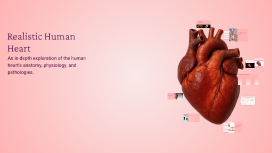
Transcript: Introduction to the Human Heart The heart's rhythmic contractions ensure a continuous flow of blood, supplying oxygen and nutrients to tissues and organs. This organ is not only vital for sustaining life but also adapts to the body's varying demands for oxygen during different activities. Left Atrium Function Left Ventricle Powerhouse The left atrium receives oxygen-rich blood from the lungs and pumps it into the left ventricle. The left ventricle, the strongest chamber of the heart, pumps oxygenated blood to the entire body through the aorta. Right Atrium Role Right Ventricle Function The right atrium receives deoxygenated blood from the body through the superior and inferior vena cava, sending it to the right ventricle. The right ventricle pumps deoxygenated blood to the lungs via the pulmonary artery for oxygenation. Anatomy of the Heart Aortic Valve Function Pulmonary Valve Role The pulmonary valve regulates blood flow from the right ventricle to the lungs, ensuring proper oxygenation. The aortic valve controls blood flow from the left ventricle into the aorta, preventing backflow into the heart. Mitral Valve Importance Tricuspid Valve Function The mitral valve allows blood to flow from the left atrium to the left ventricle while preventing backflow. The tricuspid valve controls blood flow from the right atrium to the right ventricle, preventing backflow into the atrium. Realistic Human Heart Heart Chambers and Valves Left Side Chambers: Oxygenated Blood Pumping The left side of the heart consists of the left atrium and left ventricle, which work together to pump oxygen-rich blood to the rest of the body. This process is crucial for delivering oxygen and nutrients to tissues and organs. An in-depth exploration of the human heart's anatomy, physiology, and pathologies. Right Side Chambers: Deoxygenated Blood Pumping The right side of the heart comprises the right atrium and right ventricle, responsible for receiving deoxygenated blood from the body and pumping it to the lungs for oxygenation. This ensures that carbon dioxide is expelled and oxygen is absorbed. Blood Flow Through the Heart Understanding how blood circulates through the heart is crucial for comprehending its function in the circulatory system. 3. Blood is pumped to the lungs for oxygenation 4. Oxygenated blood returns to the left atrium 1. Blood enters the right atrium from the body The right ventricle pumps the deoxygenated blood through the pulmonary artery to the lungs for oxygenation. Oxygen-rich blood returns from the lungs via the pulmonary veins into the left atrium. Deoxygenated blood from the body returns to the heart through the superior and inferior vena cavae, entering the right atrium. 2. It flows to the right ventricle 5. It flows to the left ventricle and is pumped to the body Blood then flows through the tricuspid valve into the right ventricle, preparing for the next stage of circulation. Finally, blood flows through the mitral valve into the left ventricle, where it is then pumped out to the body through the aorta. Conclusion and Key Takeaways Electrical System of the Heart The human heart is an essential organ that not only facilitates circulation but also plays a critical role in overall health. By gaining a deeper understanding of its anatomy and function, individuals can make informed decisions to promote heart health and reduce the risk of cardiovascular diseases. The electrical system coordinates the heart's rhythm and ensures efficient blood flow. 60-100 bpm 20-40 bpm 0.02 seconds Normal Heart Rate: The average resting heart rate regulated by the SA node. Bundle of His Contribution: The heart rate at which the Bundle of His can initiate impulses if the SA node fails. AV Node Delay: The time it takes for electrical impulses to pass from the atria to the ventricles. Maintain a balanced diet Heart Health and Maintenance Engage in physical activity Monitor blood pressure regularly Limit alcohol consumption Manage stress effectively Coronary Artery Disease Coronary artery disease occurs when the coronary arteries become narrowed or blocked, usually due to atherosclerosis. This condition can lead to chest pain or heart attacks, as the heart muscle may not receive enough oxygen-rich blood. Heart Attack Common Heart Diseases A heart attack, or myocardial infarction, happens when blood flow to a part of the heart is blocked for a long enough time that part of the heart muscle is damaged or dies. Common causes include clot formation due to plaque rupture in the coronary arteries. Heart Failure Heart failure is a chronic condition in which the heart is unable to pump sufficiently to maintain blood flow to meet the body's needs. It can result from various factors, including coronary artery disease, high blood pressure, and previous heart attacks.

Background Information for Heart of Darkness

Transcript: Leopold drove the slave traders out of the country, which he portrayed as a great humanitarian act. In reality, however, he did it to gain control of the region. He then paid his ‘agents’ in the country a percentage of the profits, encouraging them to make the trade more and more profitable. He also authorized the use of as much force as was deemed necessary. Background Information for Heart of Darkness Imperialism The Congo Free State Geography 1. Geography Public pressure eventually forced Leopold to sell the Congo Free State to the Belgian government. It became The Belgian Congo in 1908 Geography The colony “belonged” not to Belgium, but to Leopold personally, making him the only individual to ever colonize a country. The Congo Free State The Congo Free State Background Information for Heart of Darkness Continental Context The Congo The Congo Free State Congo River Village Agents ‘encouraged’ young men to work by holding their wives and children captive until each man’s quota was met. Many who resisted were killed on the spot. Others were beaten with cruel whips called chicotte, made from dried hippo hide with sharp edges. These treaties, along with Leopold’s assurances that his goal was to end the practice of slavery, and a promise that the Congo would remain a free trade area, led the European countries to recognize Leopold’s claim to the territory in 1885. Pre-Colonial Congo The Belgian Government ended the worst of the atrocities, but still controlled the fate of the African natives “For their own good.” The African natives were never consulted about their future Slavery Slavery was part of the culture of the Congo Originally slaves were captured during warfare, were criminals, or were debtors who could earn back their freedom Eventually, Muslim slave traders began to sell their slaves to European traders for export to the Americas Soon a revolt broke out due to the cruel conditions and slave labor Leopold sent his troops into the villages to exterminate the young men To make sure bullets weren’t wasted the soldiers were expected to return with the severed right hands of those they killed. The Congo Free State Ne Vunda, Kongolese ambassador to the Vatican, 1608 Leopold sent the famous explorer of Africa, Henry Morton Stanley, to negotiate treaties with the natives. Native chiefs were offered trinkets or cloth if they would place an X on a document in foreign tongue. Leopold II (1835-1909), King of Belgium from 1865 to 1909, infamous founder of the Congo Free State The ability to use the river to gain access to the ivory and rubber rich interior made the Congo a coveted area for colonization. As European nations negotiated and agreed to respect each others’ claims to African territory, Leopold made his claim for the Congo. 2. Pre-Colonial Congo For the first few years of Leopold’s rule his colony did not turn a profit. Soon the idea of free trade was abandoned and the natives could only trade with Leopold’s representatives, with 50% of the profits going to Leopold himself. In order to up the profits it became necessary to make use of cheap labor (gathering rubber is very labor intensive). The Congo Free State : “The Profit Imperative” The Berlin Conference, 1884-1885 The Congo Often, however, the soldiers could not meet quotas, or had to justify bullets spent on hunting, and so would cut the hands off of living women and children. During the years from 1895-1908 it is estimated that 8-10 million people died due to murder, mistreatment and starvation. The main geographic feature is the Congo River Fifth longest river in the world What you should know: Geography- Including location, natural resources and natural features of the area Pre-Colonial History- Life before Europe’s takeover The Congo Free State- What King Leopold and his agents did to make his personal colony profitable The river was of vital interest to European powers because it and its tributaries represented a 7,000 mile series of connected waterways, a highway to the African interior Quick Overview 3. The Congo Free State The Congo Free State The Human Rights Movement The Congo Free State : “The Profit Imperative” The Kingdom of the Congo (Kongo) According to Portuguese explorers the kingdom was a sophisticated and well run state, an imperial federation Known for advanced working in copper and iron Rich in ivory and rubber Imperialism: The policy of extending a nation's authority by territorial acquisition or by the establishment of economic and political hegemony (the predominant influence, as of a state, region, or group, over another or others) over other nations. Includes the system, policies, or practices of such a government. “Robbery with violence, aggravated murder on a great scale.” Heart of Darkness, page 70 Congo River

Now you can make any subject more engaging and memorable