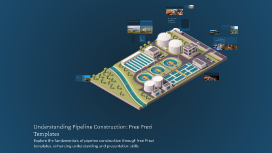
Understanding Pipeline Construction: Free Prezi Templates
Transcript: Prioritizing Safety in Pipeline Construction Pipe Laying Restoration Site Preparation Trenching Backfilling Implementing rigorous safety measures is essential to protect workers, the environment, and the integrity of pipeline systems. Regular inspections, comprehensive worker training, and strict adherence to safety regulations are crucial components. Site preparation involves assessing the area for construction, ensuring that it is suitable for pipeline installation, and obtaining necessary permits. This stage sets the foundation for the entire project, as it addresses potential environmental and logistical challenges. Trenching is the process of digging a narrow excavation in the ground where the pipeline will be laid. It requires careful planning to avoid damaging existing utilities and to ensure the trench is deep enough for the pipeline's specifications. Pipe laying is the stage where the pipes are placed into the trench. This step must be done with precision to ensure proper alignment and secure connections, which are vital for the pipeline's overall integrity. Backfilling involves covering the laid pipes with soil. This step protects the pipes from external damage and ensures stability. Proper backfilling techniques are important to prevent future ground settling. Restoration includes rehabilitating the construction site to restore it to its original state. This may involve replanting vegetation, repairing roads, and ensuring that the area is safe and functional for the community. Steps Involved in Pipeline Construction Steel offers high strength Materials Used in Pipeline Construction Resource Transport Efficiency Support for Economic Growth Plastic is lightweight option Concrete provides durability Pipelines are essential for transporting natural resources such as oil, gas, and water across vast distances. This efficient transportation system minimizes costs and reduces environmental impact compared to other methods. In addition to resource transport, pipelines support various industries including agriculture and manufacturing. They ensure that resources are available when and where they are needed, facilitating economic growth and stability. Composite materials enhance performance Innovations in Pipeline Construction Selection based on project needs A roadmap highlighting the latest advancements in pipeline construction technologies and methods. Pilot Projects Feedback and Iteration Research and Development Monitoring and Optimization Full-Scale Implementation Implementing innovative methods on a small scale to evaluate effectiveness. Investing in new materials and technologies for pipeline construction. Gathering data and feedback to continually improve construction methods. Using enhanced monitoring systems to ensure safety and efficiency. Rolling out successful innovations across larger projects. Regulatory Hurdles Environmental Concerns Regulatory hurdles can delay pipeline projects, requiring compliance with various laws and regulations. Engaging with government agencies and stakeholders early in the process is crucial to navigate these complexities effectively. Environmental concerns are a significant challenge in pipeline construction, including potential impacts on ecosystems, wildlife, and water sources. Companies must conduct thorough environmental assessments and implement measures to minimize harm. Overview of Pipeline Construction Process Phases of Construction A detailed look at the stages involved in constructing a pipeline. Excavation Installation Surveying The ground is prepared for pipe installation, involving trenching and site preparation to accommodate the pipeline. Pipes are laid in the prepared trench, and connections are made, ensuring proper alignment and secure joints. Initial assessments are conducted to determine the best route for the pipeline, considering environmental and regulatory factors. Regulatory Compliance Design Testing Key Components of Pipeline Construction Detailed engineering plans are developed to specify the pipeline's structure and materials, ensuring compliance with safety standards. The completed pipeline undergoes rigorous testing for leaks and integrity, ensuring it meets safety standards before being put into operation. Regulatory compliance is a critical aspect of pipeline construction. It involves adhering to local, state, and federal regulations to ensure safety and minimize risks to the environment and communities. Conclusion and Resources for Further Learning Understanding pipeline construction is crucial as it underpins the efficiency of modern infrastructure. To deepen knowledge in this field, various resources are available, including industry-specific publications, comprehensive online courses, and professional organizations that offer valuable insights and networking opportunities. Environmental Impact Environmental considerations must be integrated at every stage of pipeline construction. This includes evaluating the potential impact on

 Prezi Present

 Prezi Video

 Prezi Design