You're about to create your best presentation ever

Fiscal Policy Powerpoint Templates

Create your presentation by reusing a template from our community or transition your PowerPoint deck into a visually compelling Prezi presentation.

Engaging PowerPoint Templates

Transcript: Identify Audience and Purpose Understanding who will view your presentation guides your design choices. Types of Engaging PowerPoint Templates Business Templates Consider Content Type Different templates work better for various types of content, from data-heavy to narrative-driven. Business templates are designed with professionalism in mind. They feature clean lines, structured layouts, and corporate color schemes, making them ideal for presentations in corporate settings, meetings, and pitches. Evaluate Design Elements Look for templates that support your message through color, typography, and layout. How to Choose the Right Template Test Functionality Creative Templates Ensure the chosen template works seamlessly with your content and maintains audience engagement. Selecting the appropriate PowerPoint template enhances your presentation's effectiveness and audience connection. Creative templates break the mold with unique designs and artistic elements. They often include vibrant colors, unconventional layouts, and imaginative graphics, perfect for capturing attention in creative fields such as marketing, arts, and entertainment. Visually Appealing Designs Engaging PowerPoint templates feature striking visuals that are designed to capture the audience's attention right from the start. These designs leverage color, typography, and graphics to create a compelling visual experience. Customizable Layouts Conclusion Engaging PowerPoint templates play a crucial role in enhancing the clarity and effectiveness of communication in presentations. By utilizing these templates, presenters can create memorable experiences that resonate with their audience and convey messages more powerfully. Templates are designed to be flexible, allowing users to customize layouts according to their specific content needs. This adaptability ensures that each presentation can maintain its unique message while benefiting from a cohesive design. Key Features of Engaging Templates Consistent Branding Elements Consistent branding elements throughout the templates help establish a professional appearance. Using cohesive colors, fonts, and logos reinforces brand identity and enhances credibility in any presentation. Interactive Elements Engaging templates often include interactive elements such as hyperlinks, animations, and embedded multimedia. These features not only make the presentation more dynamic but also encourage audience participation and engagement. Time-efficient design process Benefits of Using Engaging Templates Increased information retention Higher overall presentation quality Enhanced storytelling capabilities "Good design is good business." Quote on Presentation Design Introduction to Engaging PowerPoint Templates Engaging PowerPoint templates play a crucial role in enhancing the effectiveness of presentations. They not only capture audience attention but also facilitate communication by organizing information in an appealing manner. Engaging PowerPoint Templates A Guide to Creating Visually Appealing Presentations

PowerPoint Game Templates

Transcript: Introduction to PowerPoint Game Templates PowerPoint game templates offer innovative ways to enhance engagement and interactivity in presentations. They transform traditional slides into dynamic experiences, making learning and information dissemination more effective and enjoyable. Quiz Templates Enhances Audience Engagement Encourages Interactive Learning Provides a Fun Way to Present Information Easy to Customize for Different Topics Jeopardy Style Templates By incorporating game elements into presentations, audiences are more likely to stay focused and participate actively, leading to improved retention of information. Game templates facilitate a hands-on approach to learning, allowing participants to apply what they learn in real-time, which enhances understanding and retention. Using game templates transforms traditional presentations into enjoyable experiences, making it easier for audiences to absorb complex information without feeling overwhelmed. Game templates are highly customizable, enabling educators and presenters to tailor content to specific audiences, topics, or objectives, thereby maximizing relevance and impact. Types of Game Templates Bingo Templates Interactive Story Templates Benefits of Using Game Templates How to Create a Game Template A structured approach to designing engaging game templates. Step 4: Test Functionality Step 1: Define Objective Step 3: Customize Content Conduct thorough testing to ensure the game operates smoothly and meets design criteria. Step 2: Select Template Adapt the template with unique content, visuals, and gameplay elements. Establish the primary goal of the game to guide the overall design. Choose a template that aligns with the game's theme and objectives. PowerPoint Game Templates Examples of Game Templates Quiz Template Quiz templates are structured for engaging quiz-style games featuring various question types, allowing players to test their knowledge in a fun and interactive way. These templates typically offer scoring features and can be tailored for different subjects or audiences, making them versatile for educational or entertainment purposes. Jeopardy Template Jeopardy templates emulate the classic TV game show format, where players select questions from categorized topics with differing point values. This format encourages strategic thinking and collaboration among players as they decide which questions to tackle, fostering a competitive yet educational environment. Engaging and Interactive Presentation Solutions The Power of PowerPoint Game Templates Utilizing PowerPoint game templates enhances engagement and interactivity in presentations. These templates facilitate learning by making information accessible and enjoyable, thereby increasing retention and understanding among audiences. Engagement is the key to effective learning and retention. Key Theme on Engagement

Engaging PowerPoint Templates

Transcript: Minimalist Designs Vibrant Designs Minimalist designs prioritize clarity and simplicity, often utilizing ample white space, limited color palettes, and straightforward fonts. This approach helps to keep the audience focused on the core message without distractions. Vibrant designs are characterized by bold colors, intricate graphics, and dynamic layouts. These templates aim to capture attention and energize the audience, making them excellent for presentations where engagement is crucial. Increased Audience Engagement Attractive templates capture the audience's attention, making it easier for them to engage with the content. A visually appealing presentation encourages participation and interaction, leading to a more dynamic experience. Enhanced Information Retention Benefits of Using Attractive Templates Visually appealing templates help to reinforce key messages, making them more memorable. When information is presented clearly and attractively, audiences are more likely to retain what they have learned. Professional Image Creation A professional and well-structured template reflects positively on the presenter and the organization. It instills confidence in the audience and enhances the overall credibility of the message being delivered. Choosing the Right Template for Presentations Key considerations for selecting an attractive PowerPoint template that resonates with the audience and enhances communication. Purpose of Presentation Audience Analysis Content Type Determine the goal of your presentation, whether it's to inform, persuade, or entertain, to guide template selection. Identify the demographics and preferences of your audience to select a template that appeals to them. Consider the nature of your content (data-driven, narrative, visual) to choose a template that supports it effectively. Clean Design A clean design helps to eliminate distractions, allowing the audience to focus on the content. It ensures that the layout is uncluttered, making it easier to follow the presentation's flow. Cohesive Color Schemes Cohesive color schemes create a harmonious look that reinforces the message and theme of the presentation. Selecting a palette that complements the content enhances visual appeal and maintains audience interest. Key Features of Attractive Templates Easy-to-Read Fonts Easy-to-read fonts are crucial for ensuring that the audience can quickly grasp the presented information. Selecting legible typefaces and appropriate sizes enhances readability and understanding. Visual Elements Visual elements such as images, charts, and icons can significantly enhance the message being communicated. They provide context and support the content, making the presentation more engaging and informative. The Importance of Attractive PowerPoint Templates Attractive PowerPoint templates play a crucial role in ensuring presentations are memorable and impactful. They not only capture the audience's attention but also facilitate better understanding and retention of information. By utilizing well-designed templates, presenters can convey their messages more effectively and maintain audience interest throughout the presentation. The Importance of Attractive PowerPoint Templates Attractive PowerPoint templates play a crucial role in effective communication by capturing the audience's attention and conveying messages clearly. They serve as a visual aid that supports the content, making presentations more engaging and memorable. Engaging PowerPoint Templates Exploring Creative Designs for Effective Presentations

Fiscal Policy

Transcript: The two "tools" used in Fiscal Policy are taxing and spending, which are opposite exchanges of money. Discretionary Fiscal Policy involves purposefully altering taxation and spending programs in order to change aggregate demand and regulate the economy. Nondiscretionary Fiscal Policy are tools that work to stabilize the economy without any changes in taxation or spending levels. For example, spending programs such as unemployment and welfare benefits are stabilizers. The intended aim of Expansionary Fiscal Policy is to increase economic growth and have high employment. Discretionary and Nondiscretionary Fiscal Policy The unintended effect of Expansionary Fiscal Policy is too much economic growth suddenly, leading to inflation which causes the value of money to decrease. Fiscal Policy: It is the use of the Federal Government's power to tax and spend to regulate economic activity. Thania Stavropoulos Meagan Danielak 2nd Hour Cervi I. Expansionary Since this policy increases economic activity and lowers taxes, Households and Firms will have more money to spend and disposable income. Therefore, businesses will be able to produce more. Also, households will receive larger amounts in Social Security when the economy is growing, so they will be able to spend more, generating revenue for firms. FISCAL POLICY Contractionary Fiscal Policy is the opposite of Expansionary, and it is meant to slow down the economy by cutting government spending, raising taxes, or a combination of both. Expansionary Fiscal Policy increases the amount of economic activity and is accomplished by increasing government spending, lowering taxes, or by a combination of both. Contractionary Fiscal Policy affects the Households and Firms by slowing down the flow of money between the Product Market and the Resource Market. In this policy, the government intends for firms to slow production. Also, if inflation is successfully slowed down, then prices for households will go down. Fiscal Policy was first used to spur changes in our economy during the Great Depression in the 1930's. The idea came from John Keynes, a British economist, who believed that you could use expansionary or contractionary fiscal policy to alter the level of aggregate demand. The intended aim is to have stable prices by fixing the inflation (high prices). II. Contractionary Fiscal Policy is implemented by the legislative and executive branches in the United States government. For example, the President and Congress could decide to use their Fiscal powers to end inflation by increasing taxes or reducing government spending. What is it? Some unintended effects of Contractionary Fiscal Policy can be harmful to the economy. For instance, the economy can slow down too much, and that could lead to economic decline in the nation. It can also lead to a low point (contraction) in the business cycle, where unemployment rates will rise. h

Fiscal Policy

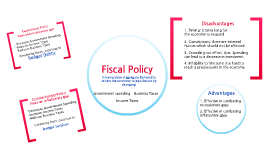
Transcript: Fiscal Policy Is government spending and taxing Changes in federal government spending of tax revenues designed to promote full employment, price stability, and reasonable rates of economic growth Expansionary Fiscal Policy Increase in government spending and / or a decrease in taxes designed to increase aggregate demand in the economy. The intent is to increase GDP and decrease unemployment Contractionary Fiscal Policy A decrease in gov. spending and / or an increase in taxes designed to decrease aggregate demand in the economy. The intent is to control inflation Keynesian approach Demand-side economics Focuses on changing aggregate demand in order to promote full employment Keynes argued that government stimulus could jolt the economy out of a severe recession or depression Supply-Side Fiscal Policy (Reaganomics) The idea that fiscal policy might directly affect aggregate supply. For example, a corporate tax cut may give businesses incentive to expand or invest in capital goods with the money saved. It usually results when the economy is already facing moderately high inflation and a price shock occurs (world wheat shortage or oil shortage) Laissez-faire (Total Free Market Capitalism) Hayek Freidman Classical economists believed that free markets without government intervention were the best way to achieve the economy’s potential output. Classical economists believed that although there might be occasional downturns in the economy, natural market forces would correct things in the long term. Discretionary fiscal policy vs. automatic stabilizers Discretionary Fiscal Policy requires congressional and presidential action to change gov. taxing or spending Automatic stabilizers automatically adjust to the ups and downs of the economy. Unemployment insurance is a good example during a down economy, progressive taxing is a good example during an up economy The problem with Lags Recognition lag Are we in a recession? How bad is the recession? How much needs to be done? Difficult questions because a recession isn’t identified until 6 months after it begins Decision making lag Action by policy makers usually takes months to approve Implementation lag The approved action then takes time to implement The recent stimulus checks are a good example I received mine 4 months after the bill was passed Effectiveness lag Once implemented fiscal policy can take from 9 to 18 months for the full impact to be realized. Will the economy still need the agreed upon policy? Fiscal or Monetary Policy The President is advocating a bill that will cut taxes by 5%. Fed chairman Ben Bernanke is planning on lowering the discount rate by ¼ point. The Fed Open Market Committee (F.O.M.C.) announced today that it will selling U.S. securities Both houses of the legislature have passed a bill that will spend $15 billion on infrastructure. Zippy received his first unemployment check today. The President announced today that the 2009 budget will be slashed in half. The Fed increased the reserve requirement today to 28%. The government announced a tax rebate today equaling $1000 per person. A contraction in the economies aggregate output (aggregate supply) combined with an increase in inflation Stagflation Stagflation occurred in the U.S. in 1973 and 1980

PowerPoint Game Templates

Transcript: PowerPoint Game Templates Customization Options Introduction to PowerPoint Game Templates Color Schemes Adding Multimedia Choosing the right color scheme is vital for setting the mood of the game and ensuring readability. Utilize complementary colors to highlight key elements while maintaining a cohesive look throughout the presentation. Integrating multimedia elements such as audio and video can elevate the learning experience. Use clips that provide context, foster understanding, or inject humor, but ensure they are relevant and appropriate for the audience. Font Choices Selecting appropriate fonts affects the template's clarity and aesthetic. Limit the variety of fonts to two or three that are easily readable and align with the game's theme for a professional appearance. Interactive Features Definition of Game Templates Incorporating interactive features like hyperlinks or embedded quizzes encourages participation. Design these elements to fit smoothly into the flow of the game, boosting engagement and retaining interest. Game templates are pre-designed presentation frameworks that incorporate game-like elements, enabling interactive learning experiences. They often include quizzes, challenges, and activities that encourage audience participation. Visual Elements Overview of Template Types Engaging and Interactive Presentation Designs Incorporating visual elements like icons, images, and shapes enhances engagement. Ensure that visuals align with the content and help convey the game's message without overwhelming the audience. Various types of game templates exist, including quiz-based games, trivia, and board games. Each format offers unique interaction levels, catering to different audience preferences and learning styles. Importance of Interactivity Interactivity in presentations fosters greater audience engagement and retention of information. By integrating game elements, presenters can deliver content in a dynamic and enjoyable manner, enhancing learning outcomes. Best Practices for Engagement Clear Instructions Audience Participation Providing straightforward instructions is vital for ensuring participants understand the game mechanics. Clarity reduces confusion, allowing the audience to focus on the content instead of the rules. Encourage questions and interaction to stimulate interest and attentiveness. Implementing interactive elements such as polls or discussions can significantly enhance engagement and retention of information. Balanced Difficulty Levels Timing and Pace Design games that vary in difficulty to cater to a diverse audience. This balance keeps participants engaged, offering both manageable challenges and stimulating competition. Strategically manage the timing of each segment to maintain participants' interest. A well-paced presentation prevents fatigue and keeps the audience engaged from start to finish. Feedback Mechanisms Incorporating real-time feedback channels, such as thumbs up or down, encourages active involvement. This immediate feedback loop enhances engagement and allows for quick adjustments during the presentation. Types of Game Templates Jeopardy Style Quiz Templates Bingo Templates Jeopardy style templates emulate the popular quiz show format, enhancing competition among participants. These templates include categories, point values, and clues, fostering a fun learning environment while challenging knowledge retention. Quiz templates streamline the process of creating engaging quizzes for various topics. They often include multiple-choice questions, scoring systems, and instant feedback features, making it easy to evaluate knowledge and retain audience interest. Bingo templates allow for a fun and engaging way to recap material or reinforce key concepts. Customizable bingo cards can cater to various subjects, promoting interaction and memory recall in a light-hearted setting. Wheel of Fortune Trivia Games Wheel of Fortune templates offer a dynamic and engaging format for review or learning activities. Participants spin the wheel to select categories and answer questions, making the learning process more memorable and interactive. Trivia game templates present a flexible format for gauging knowledge on various topics. They can include timed questions and different difficulty levels to keep participants engaged while enhancing their learning experience.

Interactive PowerPoint Templates

Transcript: Examples of Interactive PowerPoint Templates Educational Templates Interactive presentations enhance communication by engaging the audience through dynamic content, fostering a memorable learning experience. Educational templates are designed to facilitate learning through engaging quizzes, multimedia elements like videos, and interactive activities that keep students interested and motivated. These templates often include features like drag-and-drop activities and instant feedback on quizzes. Conclusion Business Templates Business templates focus on presenting complex data clearly and effectively. They incorporate interactive charts, graphs, and infographics that allow users to explore data by clicking on various elements to reveal more details, making the information more digestible and impactful. How to Create an Interactive Template Follow these key steps to design an effective interactive PowerPoint template that captivates your audience. Interactive PowerPoint Templates Test Functionality Define Your Goals Add Interactive Elements Verify that all interactive components function correctly and improve the audience experience. Choose a Template Incorporate features like hyperlinks, quizzes, and multimedia to enhance engagement. Establish the main objectives of your presentation to guide content creation. Select a suitable base template that aligns with your presentation's theme and audience. Enhancing Engagement and Creativity in Presentations Hyperlinks for Easy Navigation Hyperlinks allow users to jump between different sections of the presentation or access external websites. This feature enhances navigation and keeps the audience engaged by providing relevant information at their fingertips. Multimedia Integration Enhances Engagement Multimedia integration enriches presentations by adding videos, audio clips, and animations, making content more engaging. This feature helps convey messages more effectively and keeps the audience interested. Key Features of Interactive Templates Interactive Quizzes for Knowledge Assessment Interactive quizzes can be embedded within the presentation to assess audience understanding in real time. This feature encourages participation and helps reinforce learning through immediate feedback. Customizable Layouts for Tailored Presentations Customizable layouts allow users to modify templates to fit their specific content needs. This flexibility ensures that presentations can be tailored to suit different audiences and topics, enhancing overall effectiveness. Increased audience engagement Benefits of Using Interactive Templates Enhanced information retention Flexibility in presentation style Easy to customize and adapt Introduction to Interactive PowerPoint Templates Interactive PowerPoint templates are designed to involve the audience actively, rather than just passively viewing slides. They provide features like quizzes, multimedia, and navigation tools that make information easier to understand and remember.

Now you can make any subject more engaging and memorable