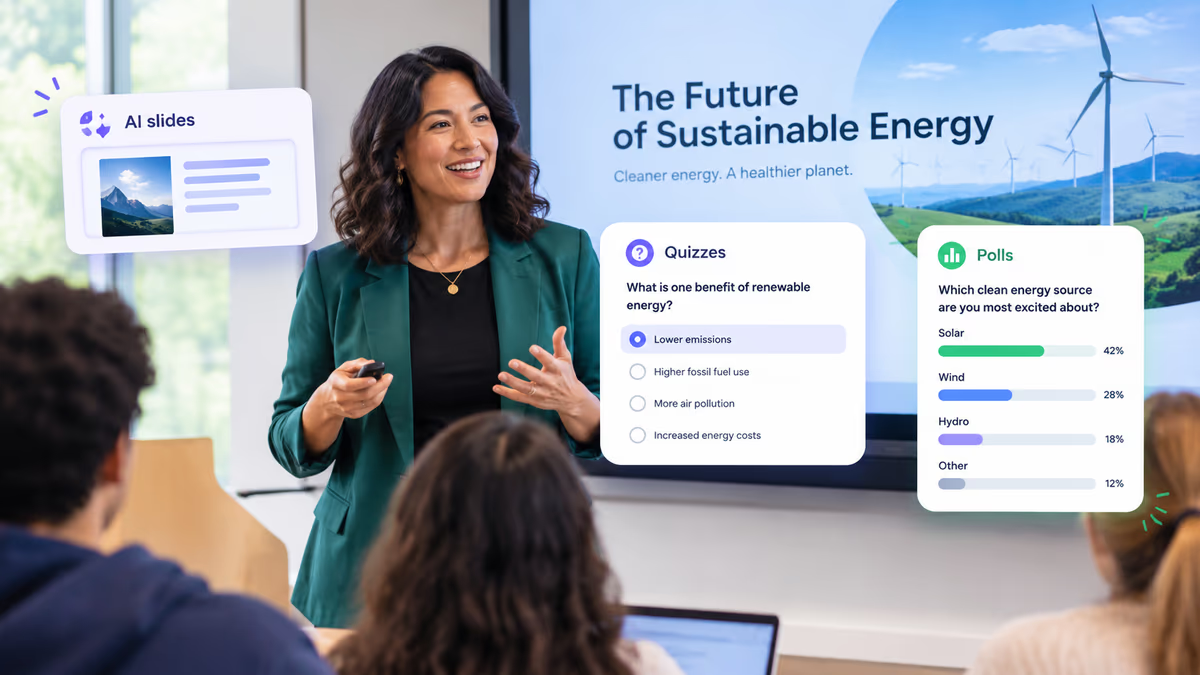
You can use AI to build a medical case study presentation by inputting your patient data, clinical findings, and diagnostic information into an AI presentation tool, which then generates structured slides following established clinical frameworks. These tools automate the time-consuming design work while organizing your case into the standard sections clinicians expect: patient history, examination findings, diagnosis, treatment, and outcomes. For clinical educators, residents, and healthcare consultants managing heavy workloads, AI presentation tools transform what once took hours into a streamlined workflow completed in minutes.
The challenge for most clinicians isn't knowing what to present, it's finding the time to present it well. Healthcare professionals spend significant time each week creating presentations, time that competes directly with patient care and teaching responsibilities. A medical case study presentation differs from a written case report in its visual structure and delivery format, requiring not just clinical accuracy but also clear visual hierarchy and audience engagement. AI tools bridge this gap by handling the design and formatting decisions that slow most clinicians down, allowing you to focus on the clinical narrative that matters.
What Is a Medical Case Study Presentation?
A medical case study presentation is a visual, structured format for communicating an individual patient's clinical journey, from initial presentation through diagnosis, treatment, and outcomes, to an audience of peers, trainees, or stakeholders. Unlike a written case report published in a journal, a presentation is designed for live delivery at grand rounds, case conferences, morbidity and mortality meetings, or executive briefings.
The clinical definition of a case study centers on detailed documentation of a single patient encounter, but the presentation format adds layers of visual communication and narrative flow. Where a written report follows strict publication guidelines, a presentation must balance clinical completeness with audience engagement and time constraints.
Medical case studies serve multiple purposes across healthcare settings. For clinical educators, they provide teaching moments that connect theoretical knowledge to real patient scenarios. Resident presenters use them to demonstrate clinical reasoning and receive feedback from attending physicians. Healthcare consultants leverage case presentations to communicate data-driven insights to hospital leadership and external stakeholders.
The distinction between a medical case study and clinical research is important to understand. A case study documents what happened with one patient, while clinical studies and clinical research involve systematic investigation across patient populations to test hypotheses or evaluate interventions. Both have their place in medical research, but they serve fundamentally different purposes and follow different methodological standards.
Key Components of an Effective Clinical Case Presentation
An effective clinical case presentation includes seven core sections: patient demographics and chief complaint, history of present illness, relevant past medical history, physical examination findings, diagnostic workup and results, diagnosis and clinical reasoning, and treatment plan with outcomes. These components align with the CARE (CAse REport) guidelines that standardize how clinicians document and share patient cases.
Patient demographics and chief complaint open the presentation by establishing who the patient is and why they sought care. This section should include age, sex, relevant social history, and the primary symptom or concern that initiated the clinical encounter. Keep identifying information appropriately de-identified to protect patient privacy.
History of present illness tells the story of the current condition. When did symptoms begin? How have they progressed? What makes them better or worse? This narrative section requires clear chronological organization, something AI tools handle particularly well by structuring your input into logical sequences.
Past medical history and review of systems provides context that influences clinical decision-making. Relevant comorbidities, previous surgeries, medications, allergies, and family history all shape how the audience interprets the case. A patient-centered medical case study presentation demonstrates how to weave this background information into a cohesive patient narrative.
Physical examination findings document what the clinician observed during assessment. Present pertinent positives and negatives that guided your diagnostic thinking. Visual aids, including images, diagrams, or examination videos when appropriate, strengthen this section significantly.
Diagnostic workup covers the tests ordered and their results. Laboratory values, imaging findings, pathology reports, and specialty consultations belong here. Tables work well for presenting multiple lab values, while annotated images help audiences interpret complex imaging studies.
Diagnosis and clinical reasoning represents the intellectual core of your presentation. Walk the audience through your differential diagnosis, explain why you ruled out alternatives, and justify your final diagnosis. This section showcases clinical thinking and provides the greatest teaching value.
Treatment and outcomes closes the clinical narrative. What interventions were implemented? How did the patient respond? What follow-up occurred? For academic presentations, this section often includes discussion of evidence-based guidelines and how they informed management decisions.
The APN 505 clinical case presentation offers an academic example that reinforces these structural best practices for clinician readers preparing their own cases.
Best AI Presentation Tools for Medical Case Studies
AI presentation tools for medical case studies fall into two categories: healthcare-specific platforms built for clinical workflows and general AI presentation makers adapted for medical use. The best choice depends on your specific needs around compliance, framework availability, and integration with existing workflows.
Healthcare-specific AI tools like those reviewed on medical education platforms offer features tailored to clinical presentations. These include pre-built structures following CARE guidelines, HIPAA-aware workflows, and medical terminology recognition. The tradeoff is typically a narrower feature set compared to general-purpose tools.
General AI presentation platforms offer broader design capabilities and more sophisticated AI features for content generation and visual design. When evaluating these tools for medical case studies, prioritize platforms that allow you to maintain control over clinical accuracy while automating design decisions.
Key features to evaluate when selecting an AI presentation tool for medical case studies include:
-
Ready-made structures with clinical case frameworks already built in
-
Data visualization capabilities for lab values, imaging, and clinical timelines
-
Audience engagement tools such as live polls, word clouds, and quizzes to keep residents and colleagues engaged during delivery
-
Collaboration features for team-based case preparation
-
Export options compatible with hospital presentation systems
-
Privacy controls appropriate for handling de-identified patient information
For clinicians comparing options, a healthcare case study PowerPoint framework provides a familiar starting point for those transitioning from traditional slide-based workflows. Those in specialized fields may benefit from discipline-specific resources like a therapy clinical case presentation framework designed for particular clinical contexts.
The time savings from AI tools come primarily from three areas: automated slide structure based on your content input, intelligent design suggestions that maintain visual consistency, and content organization that follows clinical presentation conventions. What previously required hours of formatting and design work can be reduced to minutes of content input and refinement.
How to Build a Medical Case Study Presentation with AI
Building a medical case study presentation with AI follows a five-step workflow: gather and organize your clinical information, input the case into your AI tool, review and refine the generated structure, customize visuals and data displays, and finalize for delivery. Each step leverages AI capabilities while keeping clinical judgment at the center.
Step 1: Gather and organize your clinical information. Before opening any AI tool, compile your case materials. Pull relevant notes, lab results, imaging reports, and outcome data. Organize these chronologically and identify the key teaching points or clinical questions your presentation will address. The quality of your AI output depends entirely on the quality of your input.
Step 2: Input the case into your AI tool. Most AI presentation platforms accept case information through text input, structured forms, or document upload. Provide the patient demographics, clinical history, examination findings, diagnostic results, and outcomes. Be specific, since vague inputs produce generic outputs. Include the clinical reasoning you want to highlight, not just the facts.
Step 3: Review and refine the generated structure. AI tools will propose a slide structure and content organization. Review this critically. Does the flow match how you want to present the case? Are the key teaching points emphasized appropriately? Adjust section order, add or remove slides, and ensure the clinical narrative makes sense. The clinical case study of Bob Smith shows what a completed clinical case study looks like after this refinement process.
Step 4: Customize visuals and data displays. AI-generated designs provide a starting point, but clinical presentations often require specific visual elements. Add annotated images, customize data tables for your lab values, and ensure any diagrams accurately represent the clinical findings. This is where your clinical expertise shapes the final product.
Step 5: Finalize for delivery. Review the complete presentation for accuracy, flow, and timing. Ensure all patient information is appropriately de-identified. Practice the delivery to confirm the slides support rather than distract from your clinical narrative.
Common mistakes to avoid include over-relying on AI-generated content without clinical review, including too much text on slides, and neglecting the narrative arc that makes case presentations engaging. AI handles the mechanics of presentation building, but the clinical story remains your responsibility.
Clinical Case Presentation Framework: Free Download
A clinical case presentation framework provides the structural foundation that ensures your presentation includes all necessary components while maintaining professional visual standards. A ready-made structure eliminates the blank-slide problem and gives you a proven starting point to populate with your specific case details.
The most effective clinical case presentation frameworks include dedicated slides for each core section: title and patient overview, chief complaint and history of present illness, past medical history, physical examination, diagnostic workup, diagnosis with differential, treatment plan, outcomes and follow-up, and discussion or teaching points. This structure mirrors the CARE guidelines and meets audience expectations across academic and clinical settings.
For immediate use, the medical case study framework offers a ready-to-use resource that supports immediate action. This resource incorporates the standard clinical sections while providing flexibility for case-specific customization.
Clinicians seeking patient-focused frameworks can access the case study presentation framework for patient cases, designed specifically for presentations that center the patient experience alongside clinical data.
When customizing any framework for your specific case, consider your audience and setting. Grand rounds presentations for medical case studies for students may require more explanatory content and teaching emphasis. Executive briefings for healthcare consultants need streamlined data presentation and clear takeaways. Morbidity and mortality conferences demand thorough documentation and honest outcome reporting.
A consistent starting framework also helps when you're creating multiple presentations over time. Establishing a standard format for your case presentations builds recognition with your regular audience and reduces preparation time for each new case.
Present Like a Clinician with Prezi
Presenting like a clinician means communicating with precision, authority, and respect for your audience's time, qualities that matter whether you're addressing medical trainees, attending physicians, or hospital executives. The presentation tool you choose should support this professional standard, not undermine it with distracting animations or generic corporate aesthetics.
Prezi's approach to medical case study presentations centers on clear visual communication that maintains clinical credibility. The platform's spatial presentation format allows you to show relationships between clinical findings, move into specific data points, and maintain context throughout the case narrative. This differs fundamentally from linear slide decks that fragment the clinical story into disconnected screens.
For clinical educators managing heavy teaching loads alongside patient care responsibilities, efficiency matters as much as quality. AI-powered features accelerate the creation process while maintaining the professional standards your audience expects. The goal is not simply to make slides faster, it's to present your clinical expertise in a format that commands attention and facilitates learning.
Delivery matters as much as design. The guide to effectively presenting the case study provides communication tips that extend beyond slide creation into presentation performance. How you narrate the case, engage with questions, and highlight teaching points determines whether your presentation achieves its educational or persuasive goals.
Resident presenters preparing for grand rounds face particular pressure to demonstrate clinical competence through their presentations. A polished, well-structured case presentation signals preparation and professionalism to attending physicians evaluating their progress. AI tools level the playing field by providing design capabilities that don't require years of presentation experience to achieve.
Healthcare consultants presenting to executive audiences need different capabilities, including data visualization, clear takeaways, and professional aesthetics that match corporate expectations while maintaining clinical accuracy. The flexibility to adapt presentation style to audience context distinguishes tools built for professional use from those designed for general consumers.
Keep Your Audience Engaged During the Case
A case presentation is a live event, and the strongest ones give the audience a way to participate rather than just listen. Prezi AI's presenter tools bring that interaction directly into the deck, without switching to a separate app:
- Live polls. Run an in-slide poll before you reveal your diagnosis, asking attendings or residents what they'd rule in or out first, then compare their answers to your actual differential.
- Generate quiz. Turn a completed case presentation into an interactive quiz on the spot, useful for checking resident comprehension of the case's key teaching points at the end of grand rounds.
- Word cloud. Collect open-ended responses, such as "what's your leading diagnosis?", and watch the audience's answers surface live before you reveal the confirmed diagnosis.
- Explain this to me. Viewers can ask the deck questions directly and get an AI-generated explanation, letting trainees explore a lab value or imaging finding at their own pace without interrupting the session.
- Live audience view. See who has joined the session in real time, useful for confirming attendance at required teaching conferences.
- Presenter mode. Present with notes, a camera view, and a polished presenter header, giving attending physicians a clear view of the material as you speak.
These features turn a case presentation from a one-way readout into a working session, which matters most in formats like grand rounds and morbidity and mortality conferences, where audience participation and real-time discussion are part of the expectation.
Frequently Asked Questions
What is a medical case study?
A medical case study is a detailed report of an individual patient's symptoms, signs, diagnosis, treatment, and follow-up. It documents a specific clinical encounter to share learning with other healthcare providers, contribute to medical literature, or support educational objectives. Case studies differ from clinical research in that they focus on a single patient rather than investigating patterns across populations.
What sections should a medical case study presentation include?
A medical case study presentation should include patient demographics and chief complaint, history of present illness, relevant past medical history, physical examination findings, diagnostic workup and results, diagnosis with clinical reasoning, and treatment plan with outcomes. These sections align with CARE guidelines and provide the comprehensive structure audiences expect in clinical settings.
How is a medical case study different from a clinical research study?
A medical case study documents what happened with one specific patient, while clinical research involves systematic investigation across patient populations to test hypotheses or evaluate interventions. Case studies are observational and descriptive; clinical studies follow research protocols with defined methodologies, control groups, and statistical analysis. Both contribute to medical knowledge but serve different purposes.
What are some examples of medical case studies for students?
Medical case studies for students typically present common clinical scenarios with clear teaching points, such as a patient presenting with chest pain who is diagnosed with myocardial infarction, or a case of new-onset diabetes requiring workup and management. Academic medical centers, peer-reviewed journals, and medical education platforms publish case collections specifically designed for trainee learning.
How can AI tools help you create a medical case study presentation faster?
AI tools accelerate medical case study presentation creation by automatically structuring your clinical content into organized slides, generating professional designs without manual formatting, and suggesting visual layouts for data presentation. What previously required hours of design work can be completed in minutes, allowing clinicians to focus on clinical accuracy and narrative rather than slide aesthetics.
What features help keep an audience engaged during a case presentation?
Live polls, quizzes generated directly from your slides, word clouds, and live Q&A let attendees at grand rounds or a case conference participate instead of just watching. Presenters can ask the audience to weigh in on a differential before revealing the diagnosis, then test retention with a quiz built from the same deck, all without leaving the presentation to open a separate polling tool.
Does a medical case study presentation require patient consent or de-identification?
Medical case study presentations require appropriate patient privacy protections, which typically means either obtaining informed consent or thoroughly de-identifying all patient information. Remove names, dates, medical record numbers, and any details that could identify the patient. Institutional policies and HIPAA requirements govern specific obligations, so consult your compliance office when uncertain.
What should be included in a patient case study example for grand rounds?
A patient case study example for grand rounds should include comprehensive clinical documentation, covering demographics, presenting complaint, history, examination, diagnostics, diagnosis, treatment, and outcomes, plus explicit discussion of clinical reasoning and teaching points. Grand rounds presentations often emphasize differential diagnosis, evidence-based management decisions, and lessons applicable to future patient encounters.